

Canadian Expeditionary Force, Sergeant
Dominic A. Pelusio
DATE OF BIRTH
August 7, 1884
DATE OF DEATH
January 21, 1918
MEMORIALIZED AT
Beechwood Cemetery in Ottawa, Canada
SPONSORED BY
Cranford 86
Meet Cranford 86 Honoree SGT Dominic A. Pelusio, WWI Canadian Soldier and Forester
Written by Vic Bary, Janet Cymbaluk Ashnault and Don Sweeney
Since 2016, the Cranford 86 Project has been steadily working to reintroduce the men behind the names that are listed on the bronze and granite tablets, which stand in Cranford’s Memorial Park. Featured here is a World War I soldier, the first Cranford resident to enter a world war, Dominic A. Pelusio. Different from most of the heroes that we have written about so far, Dominic never served in any branch of our American fighting forces. Instead, years before U.S. involvement in World War I, he joined the army of our ally and neighbor to the north, Canada. Researching a story that dates back over 100 years can be challenging, and this one took us way beyond our normal range of historical knowledge. The bulk of our information came from a very detailed Cranford Chronicle newspaper obituary and the online database of Canadian First World War Personnel Records. Some of the information that we uncovered was blurry and conflicting, and although there are still a few blanks in the timeline that we created for this patriotic and interesting young man, we feel that we can present an accurate depiction of the life story of Dominic A. Pelusio.
Domenico Pietro Maria Alberto Pelusio was born in Calvi Risorto, Italy, just north of Naples, on August 7, 1884, to Giovanni and Catherine Pelusio. Giovanni died in 1900, leaving wife Catherine with nine children. In 1901, in their new roles as the eldest men of the family, Dominic, 17, and his older brother Cesare, 19, paved a path for the family as they immigrated to the United States. Catherine followed her sons, and with the rest of her children, traveled to the U.S. about two years later. In the 1910 U.S. census we see all of the Pelusios, except Dominic, living at 36 Burnside Avenue in Cranford. During the 1910’s, some of Dominic’s siblings relocated to Italian communities in Rochester, N.Y. and Ottawa, Canada, while some remained in Cranford. Although Dominic never appears in a U.S. census, he is listed sporadically in the Cranford Garwood & Kenilworth Directory, living on Burnside Ave, between the years of 1913 and 1917. We envisioned the authors of the directory struggling to understand a heavy Italian accent when they listed Dominic’s brother Tiberio as “Teaberry”.
A studio portrait of Dominic Pelusio provided by Dominic's great-niece Erminia.
The Early Years of WWI
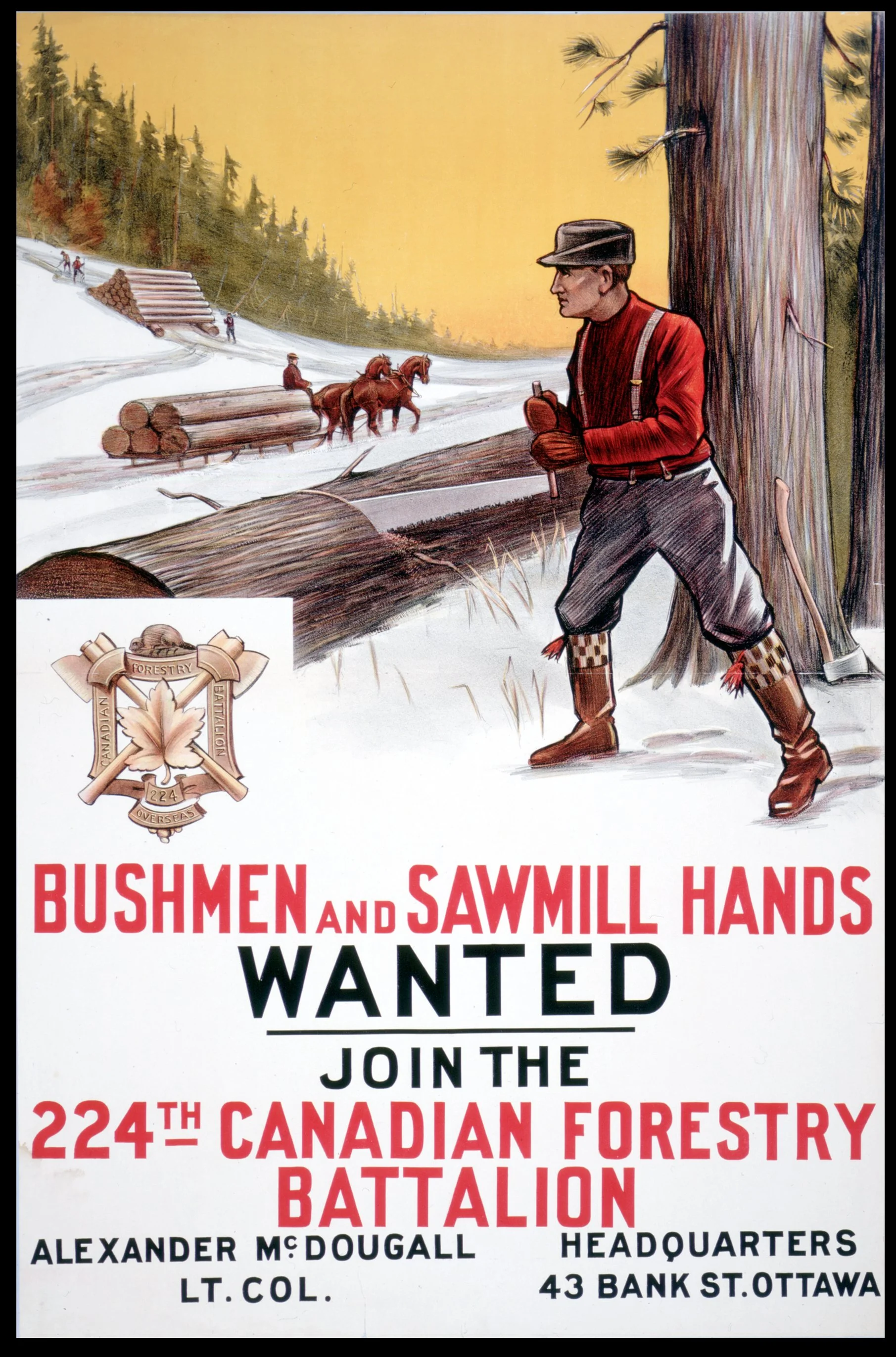
Recruitment poster calling young Canadians to volunteer for the 224th Canadian Forestry Battalion.
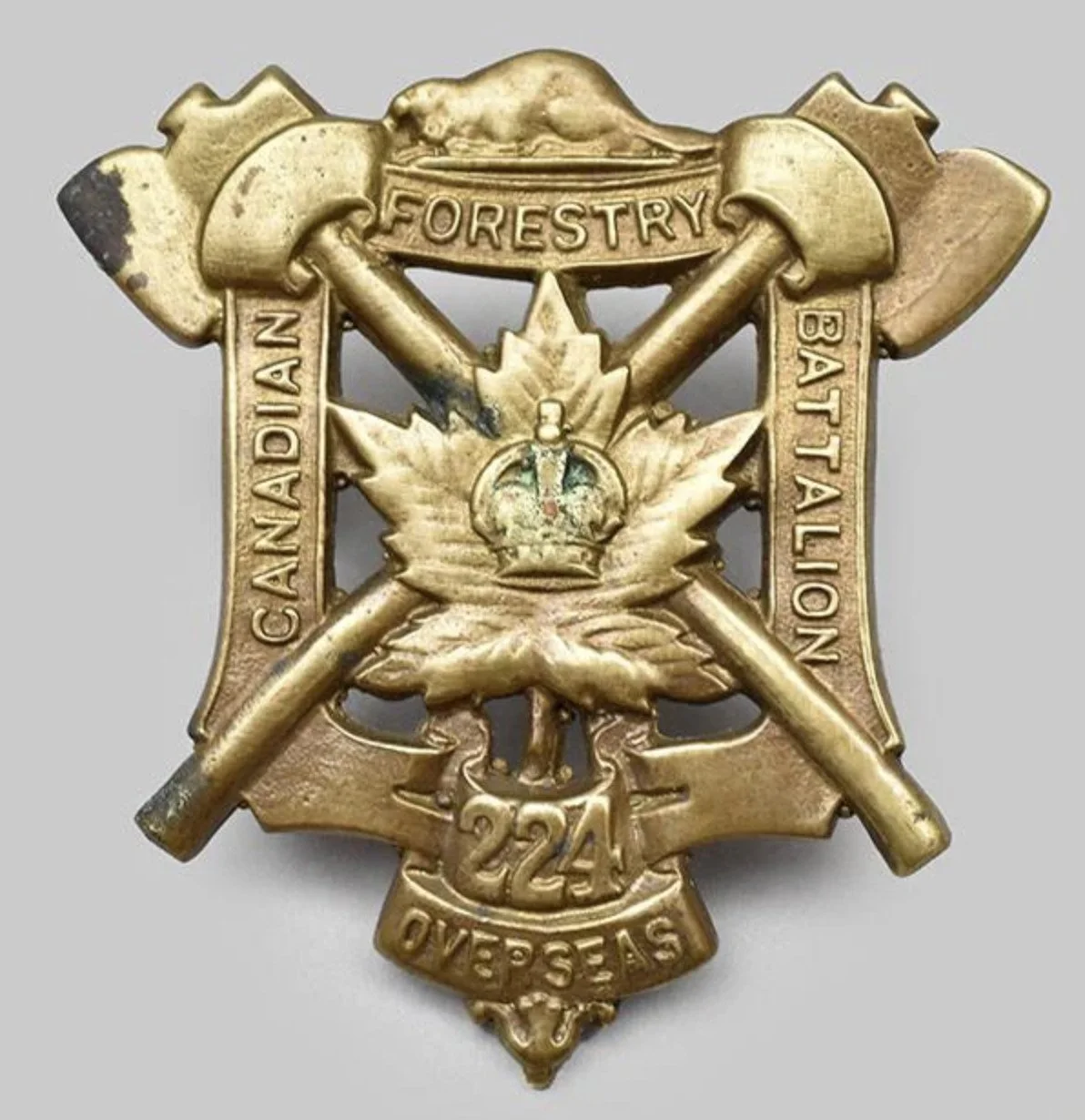
224th Forestry Battalion (Infantry) Unit Crest
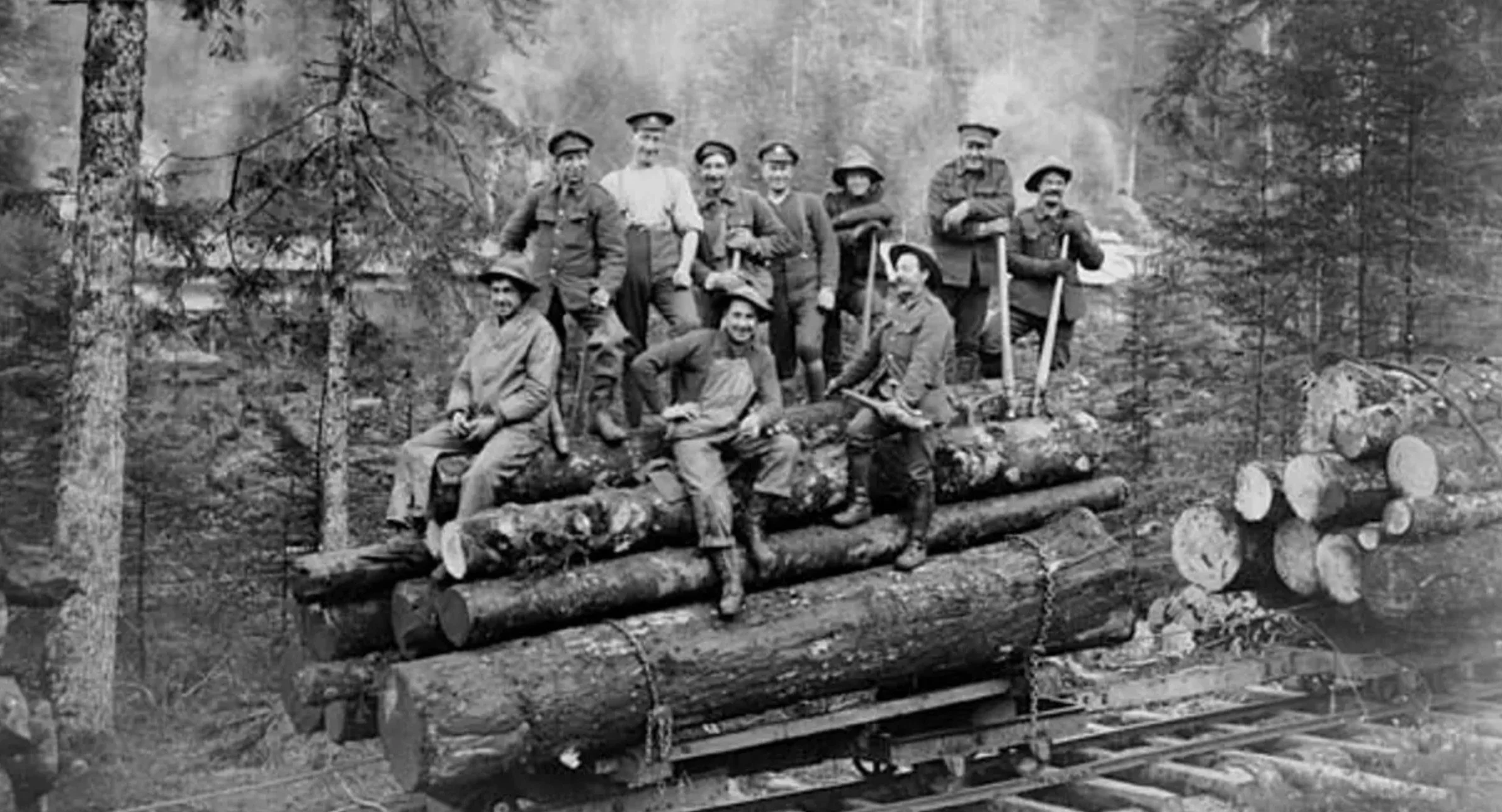
Members of the Canadian Forestry Corps pose for a photo while loading timber in Gérardmer, France, in February 1919, just after the First World War.
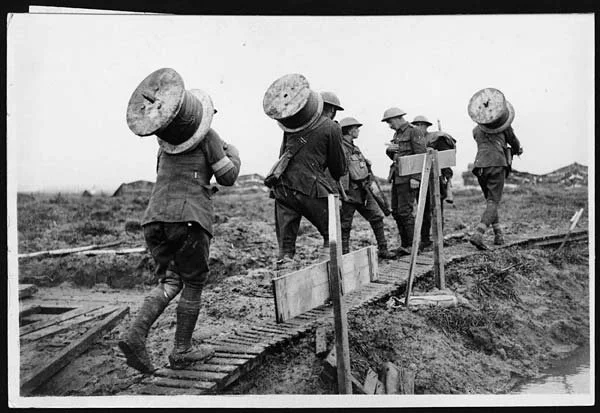
Laying communications lines in France made easier due to the presence of duckboards. The muddiness of the terrain required the mass construction of miles of these simple narrow wooden walkways both above ground, and also in the elaborate mazes of trenches that dominated the countryside.
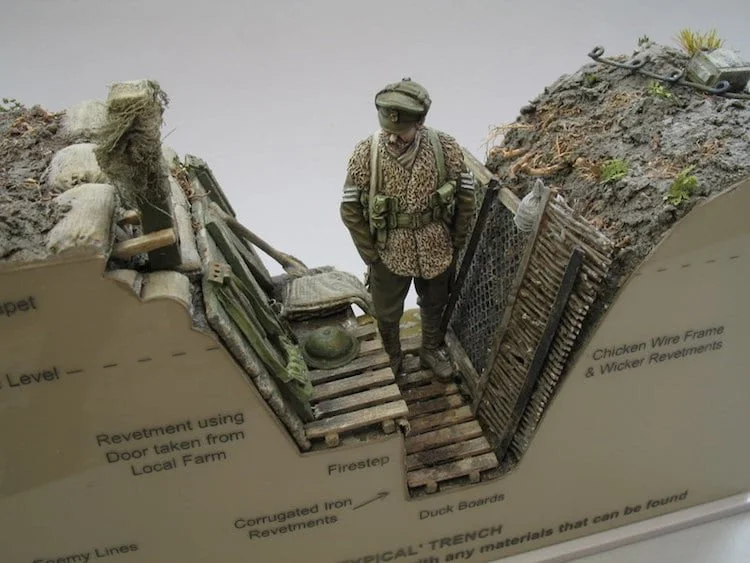
A museum diagram of a classic WWI trench, showing how the duck boards helped to keep soldiers' feet dry, helping them to avoid the wartime malady called "trench foot".
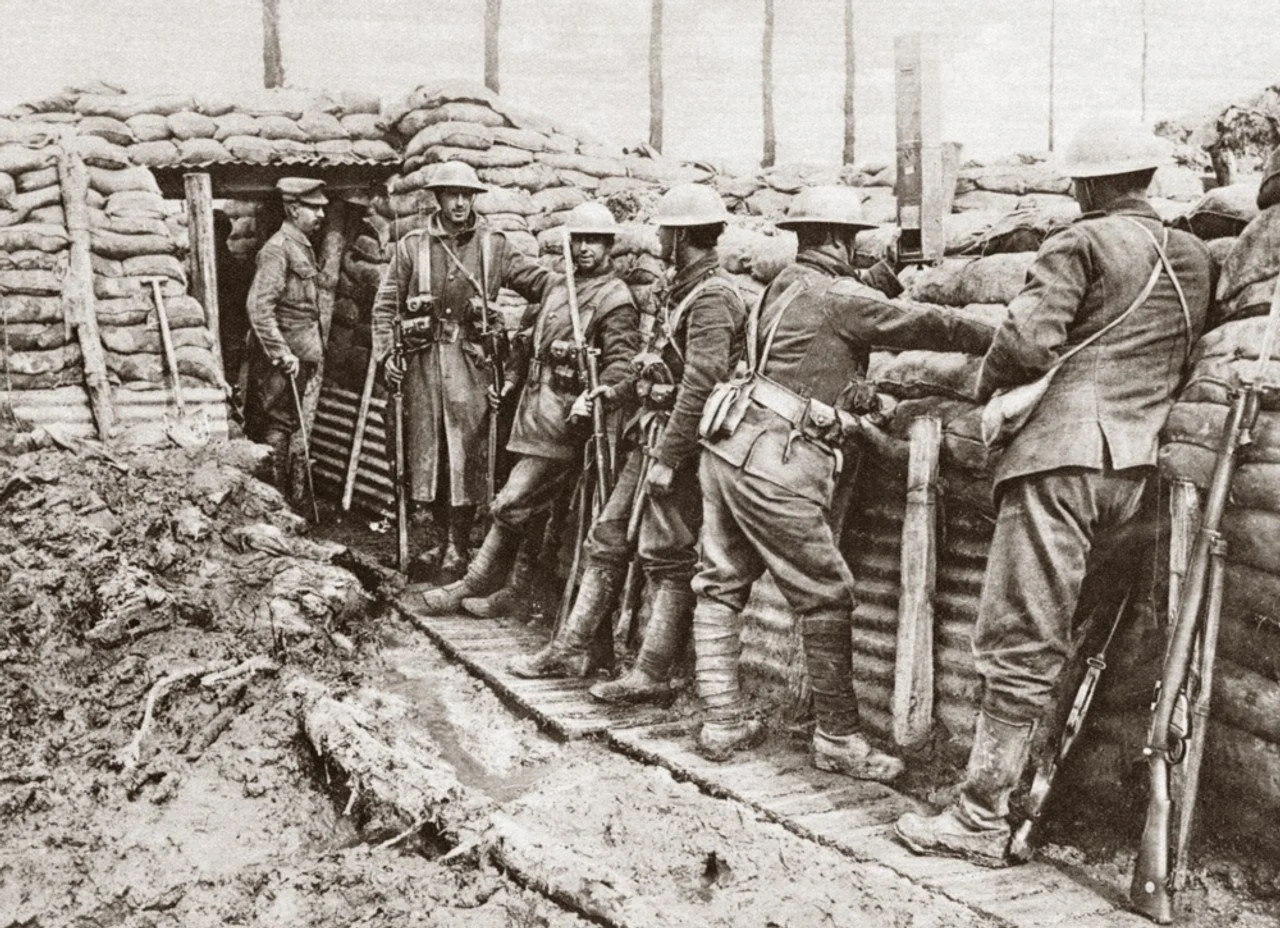
When Canada first became involved with WWI, the United States remained on the sideline. When Britain went to war with Germany on August 4, 1914, Canada, as a British Dominion, was technically also at war with Germany, although it was allowed to determine its level of involvement. At that time, the Canadian Army consisted of a regular army of only 3,110 men and several militias.
Active participation of Canada in WWI was widely supported by Canadians of English heritage and widely opposed, and sometimes sabotaged, by Canadians of French heritage. Canada opted to create a mostly voluntary Canadian Expeditionary Force (CEF) that would eventually number 620,000, mostly men. 1,901 nursing sisters also served. Non-Whites (Blacks, Native Indians, and Chinese) were largely excluded. The CEF would ultimately consist of 260 consecutively numbered battalions formed into four divisions. The first division landed in France February, 1915.
With the CEF more focused on combat, Canada also provided large numbers of separate, supporting troops including the Canadian Forestry Corps (35,000 men) to which Dominic Pelusio would be assigned.
Italy Joins the Great War
In May of 1915, the Ottawa Citizen newspaper reported on a large gathering that took place in Ottawa when Italy joined WWI on the side of the Allies. Dominic’s younger brother Tiberio was the leader of an Italian labor union in Ottawa. On the front steps of the House of Commons, to a crowd of approximately 2,000 men and women of Italian descent, Tiberio delivered a rousing speech in English, and then in Italian. He praised Italy and urged the young men in the crowd to answer the call of duty in support of their motherland. The speech was met with an enthusiastic response from the audience and followed by a lively procession through the streets of Ottawa, with participants carrying colorful lanterns and the flags of the Allied countries. The Italians were encouraged with cheers from “a huge throng of admiring spectators of every nationality in the city”. Two months later, apparently inspired by his brother’s words and the patriotism of his countrymen, Dominic enlisted in the Canadian Army, almost two years before the United States would enter the war in April of 1917. Interestingly, on his application for service he listed “Nurse/Cook” as his contributing skills. It was also noted that Dominic had “numerous scars on both legs” and that he was the sole supporter of his widowed mother. After 14 weeks of basic training, Dominic was sent to “Cookery School” in Kingston, Ottawa. Since the Forestry Battalions were always looking for good cooks, most likely this became Dominic’s duty overseas. As our team discussed Dominic’s entry into the Great War, we surmised that an Italian cook from the area of the birthplace of the Margherita Pizza was a welcome addition to any early 20th century Army battlefield. This type of pizza, bearing the colors of the Italian flag, was invented in Naples, Italy, in 1887.
Dominic sailed for Europe April 16, 1916 with the CEF, arriving in England, where his unit became the 224th Forestry Battalion. While in England, he met a Scottish-born nurse, Margaret McDonald. In an immigration record, Margaret was described as auburn haired with a fresh complexion. The couple, apparently quickly smitten with each other, were married in July of 1916, in the borough of Pancras, in London.
Foresters Battalions
The term, Forester’s Battalion, requires some background as it does not exist in the American military.
In WWI, Canada assisted in the production of timber for war purposes by providing the manpower necessary to cut and process timber in England. It was anticipated that trench warfare would require great amounts of timber.
Britain had traditionally obtained its timber by water from North America, Russia and Scandinavia. During the war, these shipping routes were under constant threat of attack from German U-boats. In addition, there was a critical need for cargo space to transport more valuable supplies, such as food and ammunition, to England and France. Timber was available overseas, but there was a shortage of “skilled laborers, fellers, haulers and sawyers” to harvest and process the resource.
Why was timber in great demand at the front lines? Lumber was needed to bolster trench walls (“revetting”), to line the muddy trench floors (“duck boards”), and to provide stakes for barbed wire. Railway ties and lumber for constructing corduroy roads over muddy terrain were also in demand. Finally, other lumber was used to construct shelters for troops, aircraft hangers and military buildings.
By March 1, 1916, the Canadian government created the 224th Battalion (Pelusio’s battalion) dedicated specifically to harvesting and processing timber resources overseas. An additional three battalions – the 230th, 238th and 242nd, would be organized and recruited over the next 15 months.
Answering the request of the British government, by the end of the year, 11 companies of Canadian lumbermen were working in Britain, and three other companies (including Pelusio’s company) had crossed the English Channel to work in France. In total, 35,000 Foresters served in WWI. These units were sometimes referred to, perhaps somewhat disparagingly, as “Sawdust Fusiliers”. A fusilier was a 1700s term for an infantryman that carried a fusil, or musket, in battle. By 1900 it was an honorary title, since muskets had been replaced by fast firing rifled firearms. Most Foresters spent the duration of the War in England and Scotland. A small number, including Dominic’s 224th Battalion, served in France and may sometimes have been employed as infantry.
Gas Warfare in WWI
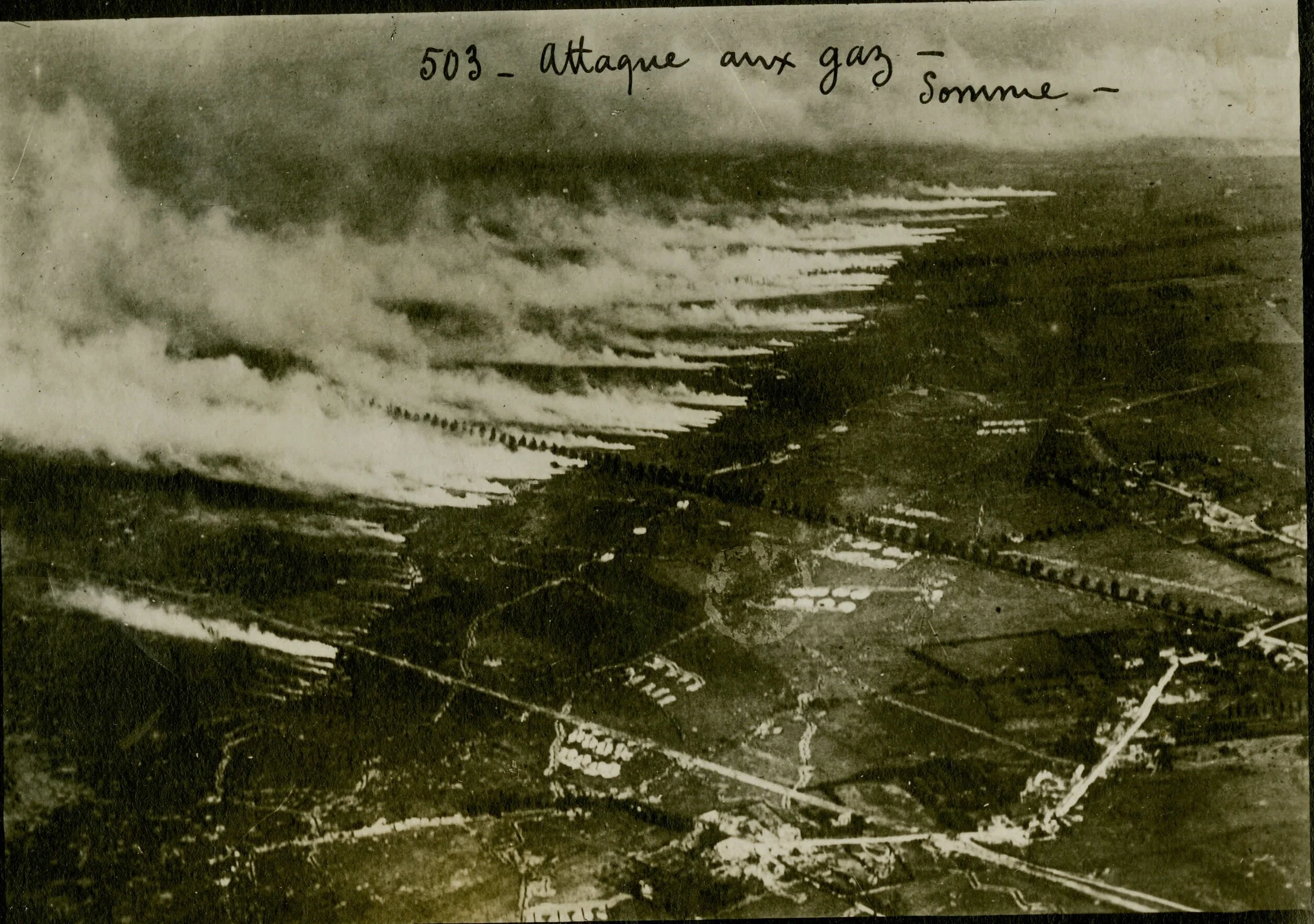
A WWI photograph illustrating a gas attack. Providing that there was a steady prevailing wind, the gas released from pressurized canisters would flow into enemy trenches. Being heavier than air, the poisons would settle into the trenches that defended troops from most other armaments. A reverse of the direction of the wind would be disastrous for the attacking force.
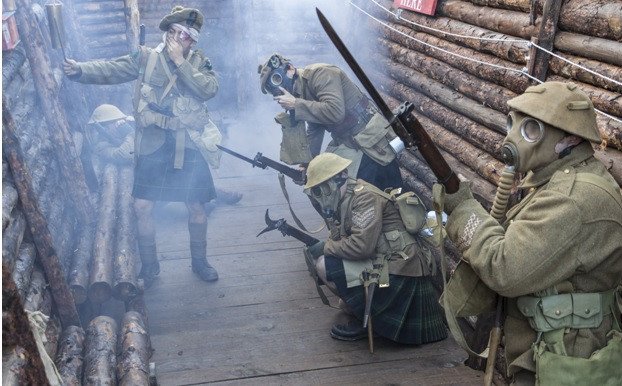
A typical scene inside a WWI trench outfitted with advanced construction. Wood lines the walls and floors, keeping the soldiers more comfortable and above the wet ground that made trench foot a common, debilitating condition of the infantry soldier. Note that each soldier is equipped with a gas mask, a standard part of a WWI issued gear.
Dominic’s Cranford Chronicle obituary indicates that he sailed with the 224th from England to France in August of 1916. It reported that after months of trench fighting, his unit was targeted by gas warfare.
Chlorine and phosgene were both gases and their use was prohibited by the 1899 Hague Declaration Concerning Asphyxiating Gases, and the 1907 Hague Convention on Land Warfare. Austria, France, Germany, Turkey, the United Kingdom and the United States were all signatories to both documents.
As gases, both chlorine and phosgene were released from ground canisters and required the prevailing wind to blow over the enemy’s trenches. The first use of both gases was by Germany. It introduced chlorine gas at the First Battle of Ypres April 22, 1915. Britain responded with its own use of chlorine gas on September 25, 1915. Germany introduced the more deadly phosgene gas later in the war, using it individually or in combination chlorine gas. Mustard gas was an oily liquid which dispersed as droplets from an exploding artillery shell and was first used by the Germans on July 12, 1917. Since it was delivered by artillery, it could be used from great distances and with much more accuracy than the earlier ground dispersed chemical weapons. Both sides introduced gas masks and anti-gas training in response to these weapons, which gradually reduced the number of casualties due to chemical weapons. However, these silent killers remained feared and effective throughout WWI.
We Learn of Dominic’s Previous War Experience
Most of Dominic’s time spent overseas seemed to be spent in England, where he was in and out of military hospitals in England due to swelling and pain in one or both legs. A handwritten notation on his records indicated that the “edema” (swelling) and scars on Dominic’s legs were a result of the “Turkish War – 5 years ago”. A few strategic internet searches solved the mystery of the source of Dominic’s old bullet wounds and revealed probably why he was not on the U.S. census in 1910. We believe that in 1911, Dominic fought for his home country of Italy in the Italo-Turkish War. Not one of our team of four was aware of the history behind this conflict even though it holds the distinction of the first use of aerial bombing in war. The Italo-Turkish War, which lasted only one year, was fought between Italy and the ancient Ottoman Empire over the colonization of land on the northern African coast, most of which was controlled by the Ottoman Empire. The heated political environment in Europe, described as having “feverish nationalism”, was fueled by a very complex, turbulent period in time for countries around the Mediterranean Sea. Literally every European power had their sights set on the acquisition of lands in northern Africa, for the wealth that was held by their underground minerals. Europe, in the early years of the 20th century, was in a raging industrial period. England, Italy and Germany were each developing massive, mechanized armies and powerful navies. Their needs for steel and energy sources such as coal and oil were great. The countries of northern Africa were already partly conquered by rising European mights, but Italy had its sights on the oil-rich area of modern-day Libya. The war ended when Italy conquered the city of Tripoli and was awarded the north African provinces for which it had gone to war.
Domenic’s obituary reports that he was overcome by gas while facing Germany on January 2nd, 1917 in the Battle of Somme. He was sent to England for treatment before eventually being sent back to Canada for hospitalization. In May of 1917, after his condition stabilized, Dominic returned to Cranford on furlough. During this time he participated in a speaking tour, supporting the Red Cross, relating his experiences in the war zone to school children. A Courier News article from 1917 describes him speaking to students at Westfield High School. Unfortunately, after Dominic returned to Canada, he once again required hospitalization at St. Luke’s in Ottawa. He was diagnosed with “leucocythaemia” or in modern terms, leukocytosis or a high white blood cell count. Dominic remained hospitalized until, sadly, he passed away on January 21st, 1918 at 33 years of age. The cause of his death was lymphatic leukemia resulting in cardiac failure.
Sorting Out the Facts
Our team tried very hard to correlate the information found in Dominic’s obituary versus his official medical records. The obituary stated that he served for months in the trenches in France, but his medical records describe several hospital admissions during that time in England, for treatment to the chronic leg problems with which Dominic was plagued. The records that we saw made no mention of any effects of toxic gas. We can verify that Dominic was in France, but for a short time, as indicated by a notation on a medical card stating “18 days in France”.
Leukemia can be caused by exposure to mustard gas. However, mustard gas was not “officially” used until July of 1917, by the German Army. This was seven months after Dominic’s reported exposure to some type of gas at the Battle of Somme on January 2nd, 1917. We invite the reader to ponder the possible cause of Dominic’s fatal illness.
Additionally, the Battle of Somme, one of the deadliest battles in history, was waged from July 1st to November 18, 1917, ending a few months before Dominic’s reported gassing incident in that battle. This was another discrepancy found in the obituary which we had hoped would guide us accurately through Dominic’s life. It would seem that the author of the obituary used the information that was available at the time, probably family hearsay, rather than official records and historical accounts which are so readily available now in the internet age. It should be noted though, that family stories should not be completely dismissed. Anyone who has had experience in genealogical research will tell you that these secondhand tales usually hold at least a grain of truth and should be explored.
Inaccuracies in Dominic’s documented history do not detract from the fact that this young man went to war in support of his home country, not once, but twice. Despite being afflicted with troublesome war wounds, he left the safety of Cranford to join Canada in the fight against the Central Powers and at the same time, provided income to his widowed mother. Dominic Pelusio was a true patriot and we are proud to recognize him as one of Cranford’s 86 Fallen Heroes.
Honoring Dominic
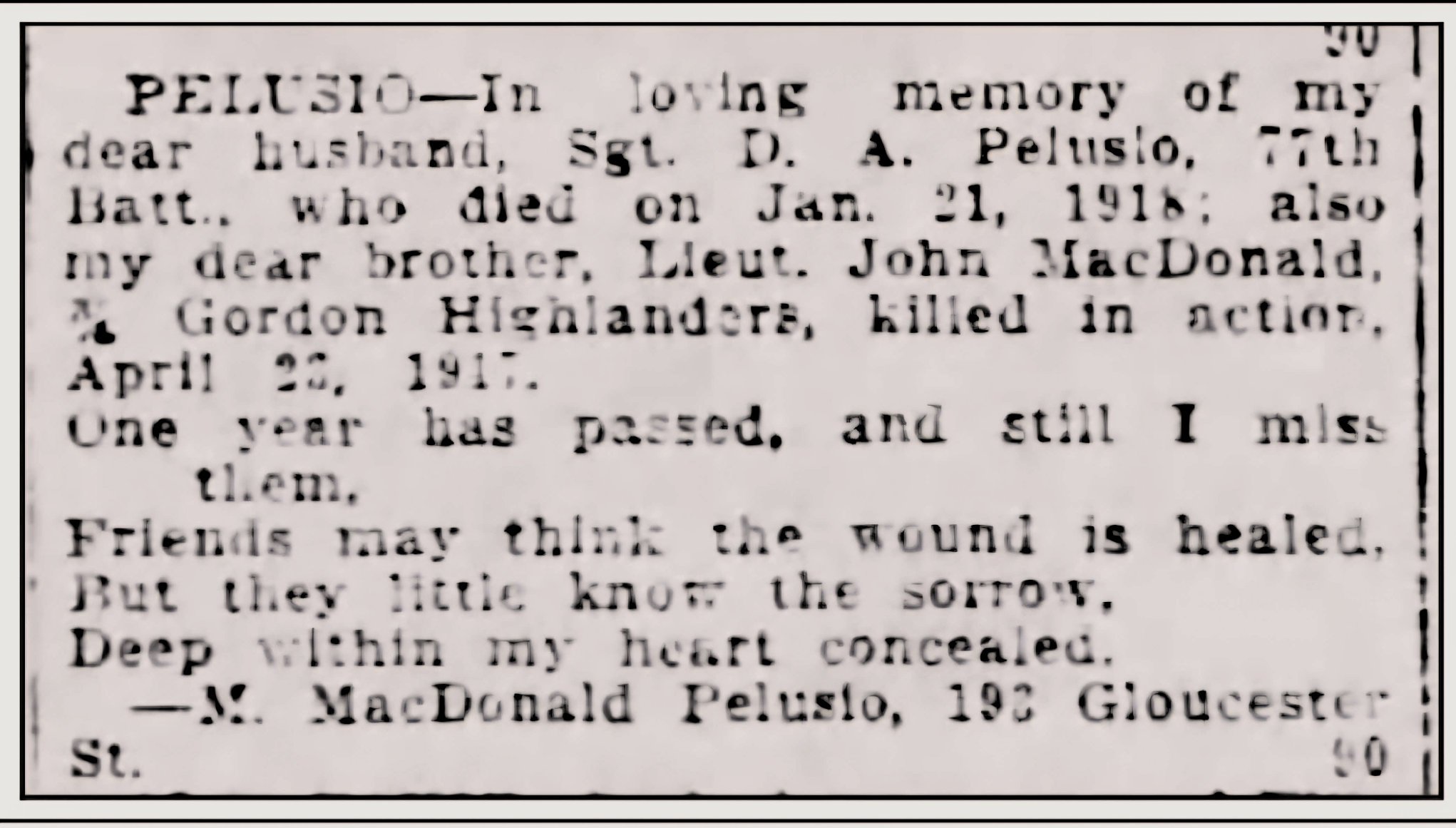
Dominic’s wife, Margaret MacDonald Pelusio, lost both her brother and husband in WWI. She submitted this memorial to the Ottawa Citizen one year after Dominic’s death.
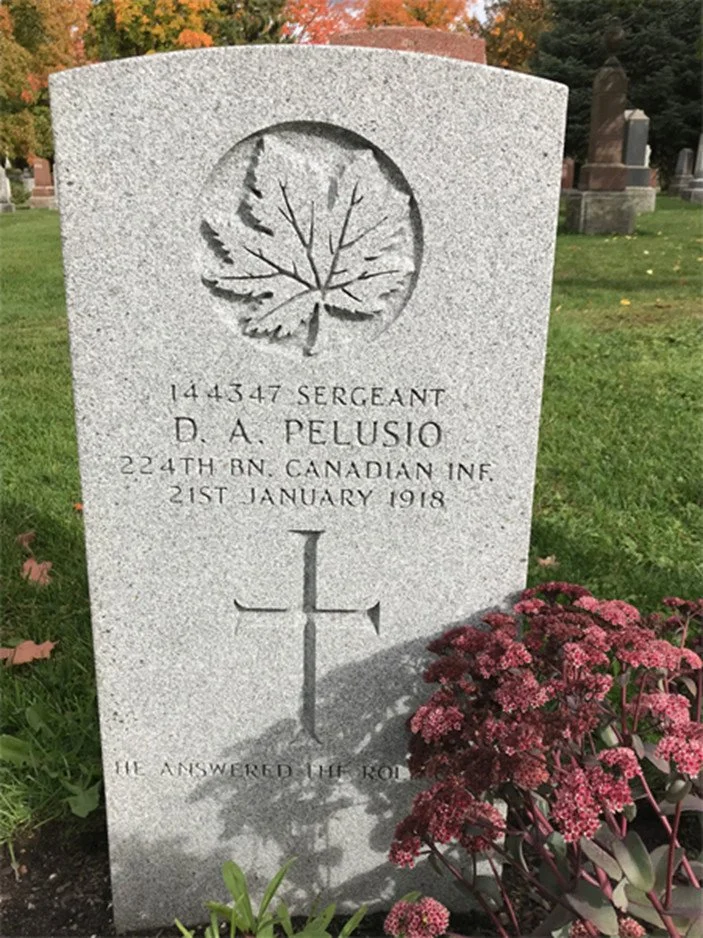
Dominic Pelusio was the first resident of Cranford to lose his life in WWI. 108 years later, as one of Cranford’s 86 Fallen Heroes, his story has finally been told and his image revealed. Dominic is buried at Beechwood Cemetery, Ottawa, Canada. The maple leaf and cross indicate that this soldier is buried in a Commonwealth War Graves Commission (CWGC) cemetery.
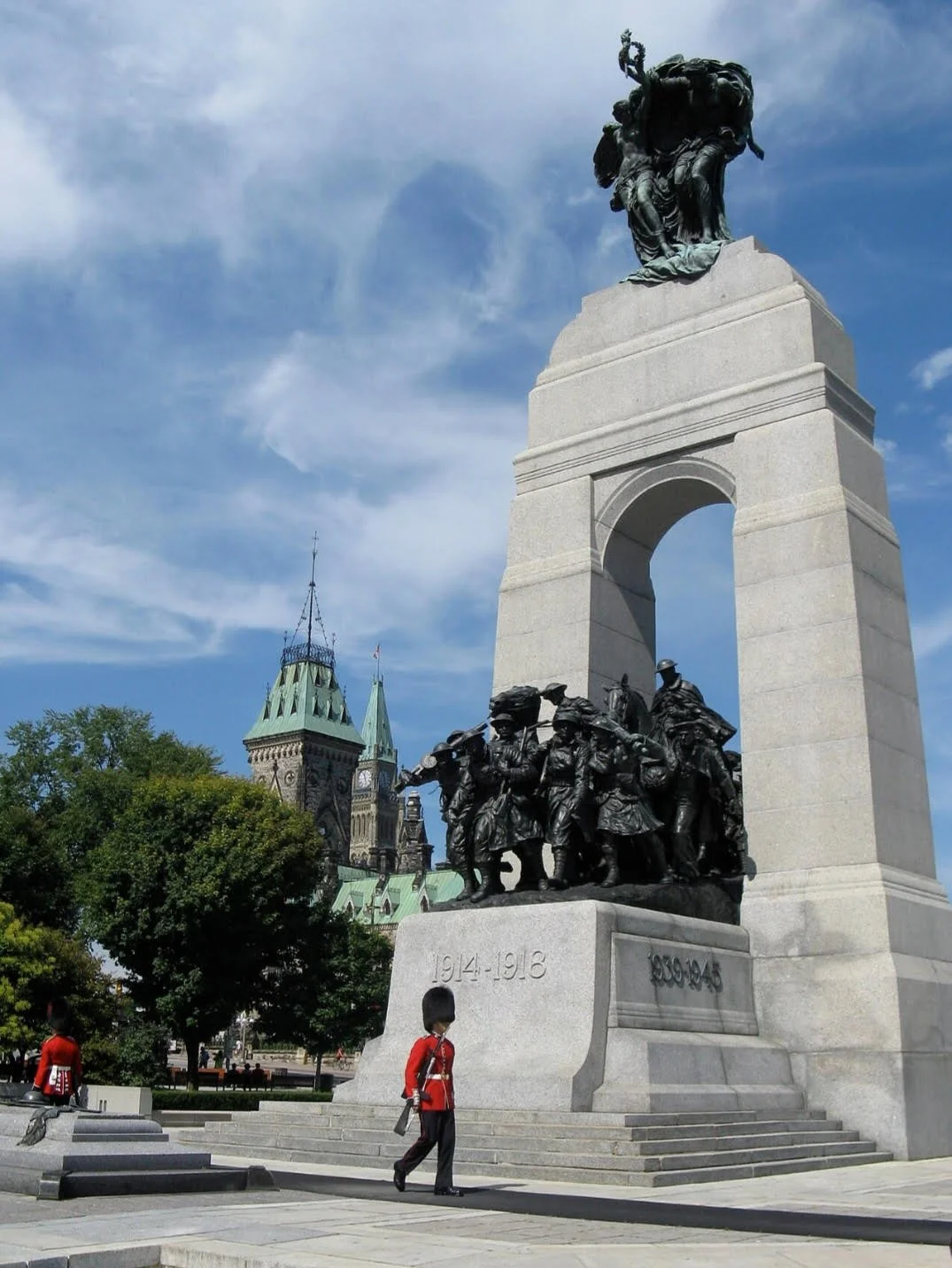
The National War Memorial in Ottawa, Canada is an impressive monument which symbolizes the sacrifice of the Canadian Armed Forces which have served Canada in time of war. It is the site of Canada’s national Remembrance Day Ceremony in November of each year. There are depictions of 22 different Canadian WWI-era service members, including one representing a Canadian Forester.
In late January, 1918, a flag-draped gun carriage carried the body of Canadian Expeditionary Force soldier, Sgt. Dominic A. Pelusio, to its final resting place. A service was performed in the “undertaker’s chapel” at Beechwood Cemetery in Ottawa, Canada. Flags of every Allied country were flown, and the Union Jack flag was draped over his coffin as it was under it that Dominic served. Many members of the Great War Veterans’ Association were present at the funeral and 150 wounded soldiers from his regiment carried floral arrangements in the procession. Dominic’s wife Margaret and brothers Tiberio and Cesare with his sister Erminia traveled to Ottawa for the funeral. His mom Catherine was unable to travel due to health restrictions; she remained in Cranford with Dominic and Margaret’s son, 18-month-old Albert Cesare. Dominic was reportedly survived by his mom, three sisters and four brothers as well as his wife Margaret and their son.
Finding a photo of a WWI serviceman is a difficult task. We were very fortunate to locate the granddaughter of Dominic’s sister Erminia, also named Erminia, living in Rochester, N.Y. Our team was ecstatic that she was able to provide us with a photo of Dominic, all five feet five inches of him, in a sepia tone, in his Sunday best. That treasured image will grace Dominic Pelusio’s street banner which will be placed prominently in our town.
Dominic Pelusio and all of Canada’s fallen military are paid tribute to in Canada on November 11th, Remembrance Day. Of the 620,00 CEF members in WWI, 67,000 were killed and 173,000 wounded (four out of five survived and returned to duty). This was an astounding 39% casualty rate. In Ottawa, activities on this day are centered around the beautiful National War Memorial, which was dedicated in 1939.
Because Dominic’s address of record, when he entered the military, was Cranford N.J., Dominic’s name is on our town’s WWI monument in Memorial Park on Springfield Avenue. Each year in May, on Memorial Day, a parade is held. In the ceremony afterwards, as has been done for over 100 years, Dominic’s name, along with the names of all of Cranford’s 86 Fallen Heroes, will be read. On Memorial Day 2026, Dominic’s story will be highlighted and his brand new street banner will be unveiled.
A special note of thanks goes out to the members of the Canadian Expeditionary Force Study Group who enthusiastically responded to our request for assistance in documenting the life and service of Sgt. Dominic A. Pelusio.
Addendum
Below is additional media relevant to this story.