
Army, Captain
Joseph V. Whelan
DATE OF BIRTH
February 1, 1942
DATE OF DEATH
October 25, 1969
MEMORIALIZED AT
Arlington National Cemetery, Virginia
SPONSORED BY
The Salway & Dolan Families
Meet Captain Joseph Vincent Whelan, Green Beret, Vietnam Conflict, One of Cranford’s 86
Joseph Vincent Whelan was born on February 1, 1942 in Bayonne, N.J. He was the fourth child and only son of parents Joe and Lillian. The Whelans moved to Cranford two months after Joe’s birth. Arriving in town at such a young age, Joe most definitely grew up as a “Cranford kid”, in the family’s home at 126 Makatom Drive. He attended St. Michael School before moving up to Cranford High School, from which he graduated in 1959.
Cranford High School alumni who knew Joe were eager to speak with us about him and we were bombarded with an array of adjectives which created such a pleasant description of their classmate. Mary Grace Grall Killmer, CHS ‘59, had one of the earliest memories. She was a neighbor to Joe in preschool days and stated that “Joe was kind and friendly, a true friend to all who were fortunate enough to know him”.
Written by Janet Cymbaluk Ashnault. Research by Janet Cymbaluk Ashnault, Vic Bary and Don Sweeney
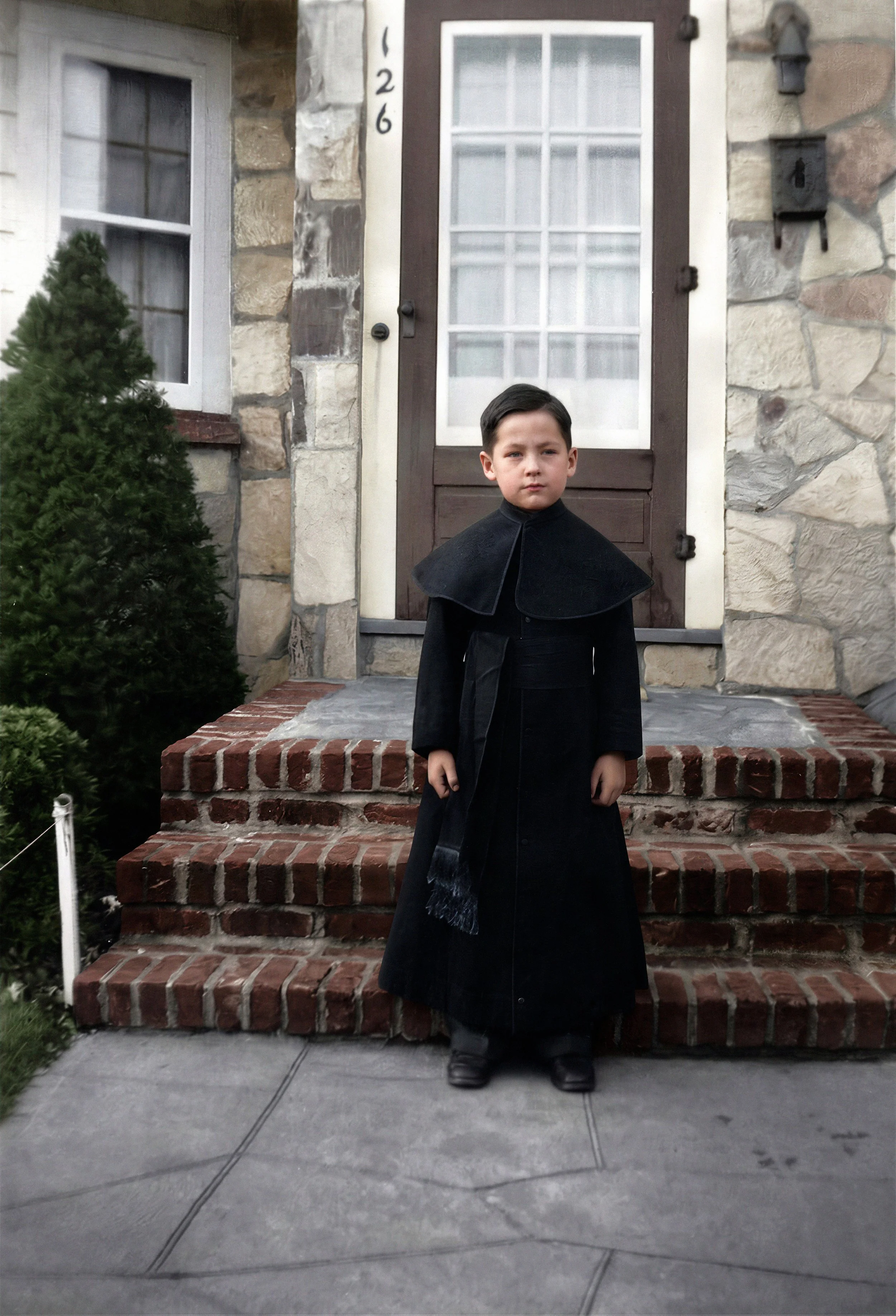
In what we believe was an appearance in a play or pageant at St. Michael School, Joe is dressed as a parish priest.
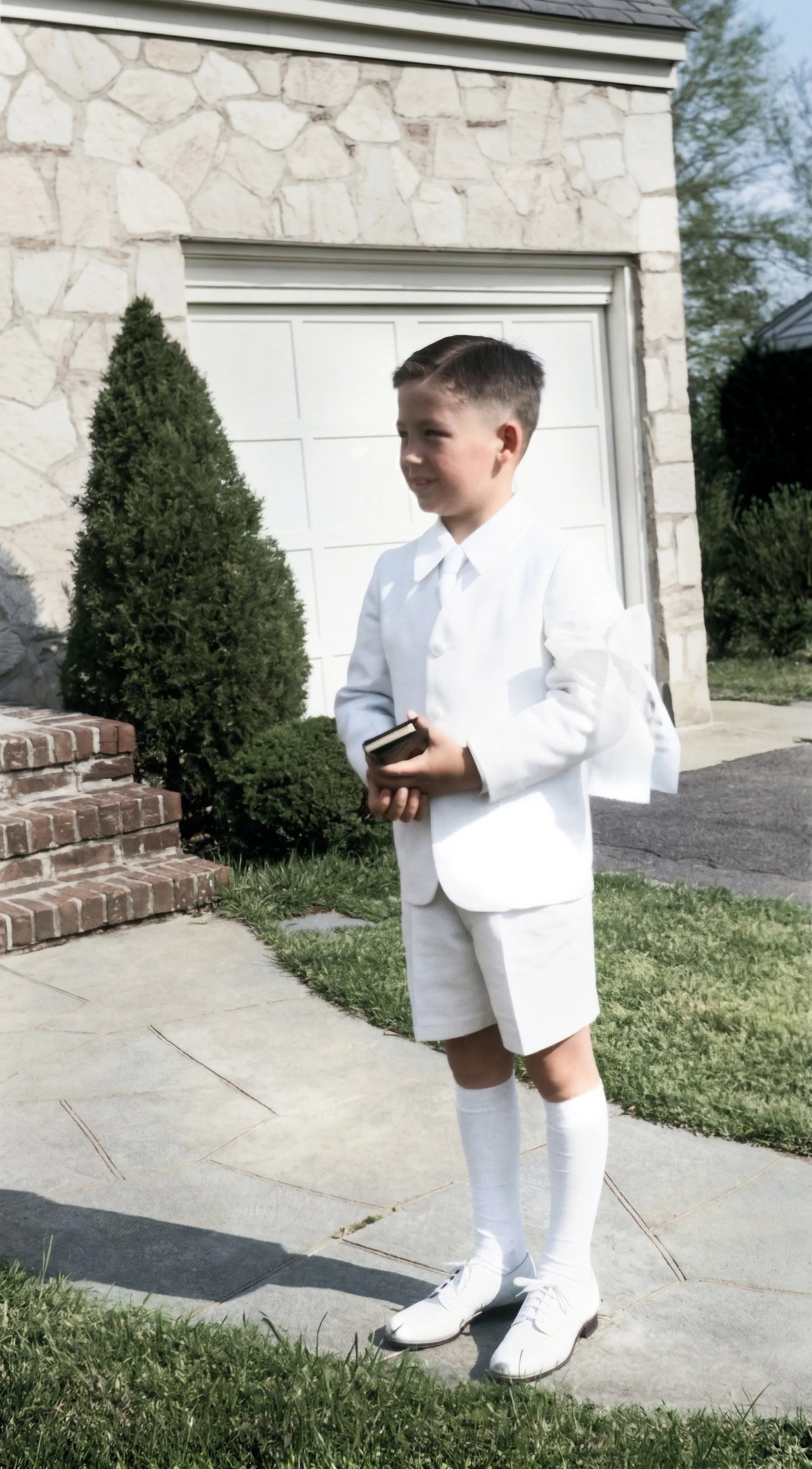
Sporting the traditional white shorts and sport coat and with bible in hand, Joe is ready for his First Holy Communion at St. Michael Church.
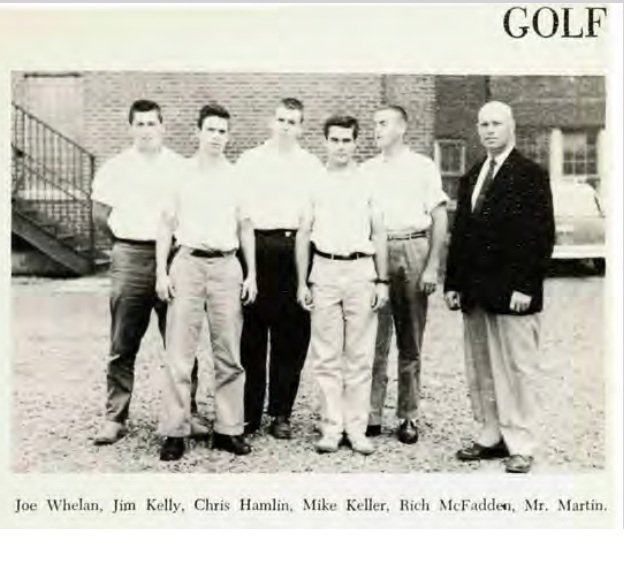
Searching through the Cranford Chronicle archives gave us a picture of Joe’s early years in Cranford. He was a member of Cub Pack 178 and at age ten, the future Cougar defenseman was awarded an “all-American day and night football” for selling subscriptions to the Chronicle. His presence was noted in athletics all throughout his young life in Cranford, beginning with Little League baseball and recreational basketball. In high school, Joe weighed in at 205 and was the heaviest player on the varsity football team. The Class of ‘59 Cougars had a slow start to their football season, but went on a winning streak for their last four games. In one of those wins it was noted that Whelan “sparkled” and not once, but twice broke through tackle to block the extra point. In the pre-Thanksgiving game analysis, Coach Grayson indicated that Joe Whelan was one of the players who was “expected to see a lot of action” in Cranford’s traditional holiday game against Jefferson. The Cougars won this one, 14-2. We spoke with ‘59 football teammate, Dave Boyd, who remembered that Joe was “never without a smile”. Joe Whelan lettered in football and golf and in May of ‘59 the Cranford Chronicle noted that as a golfer, he was currently undefeated in high school play.
Joe Makes a Decision
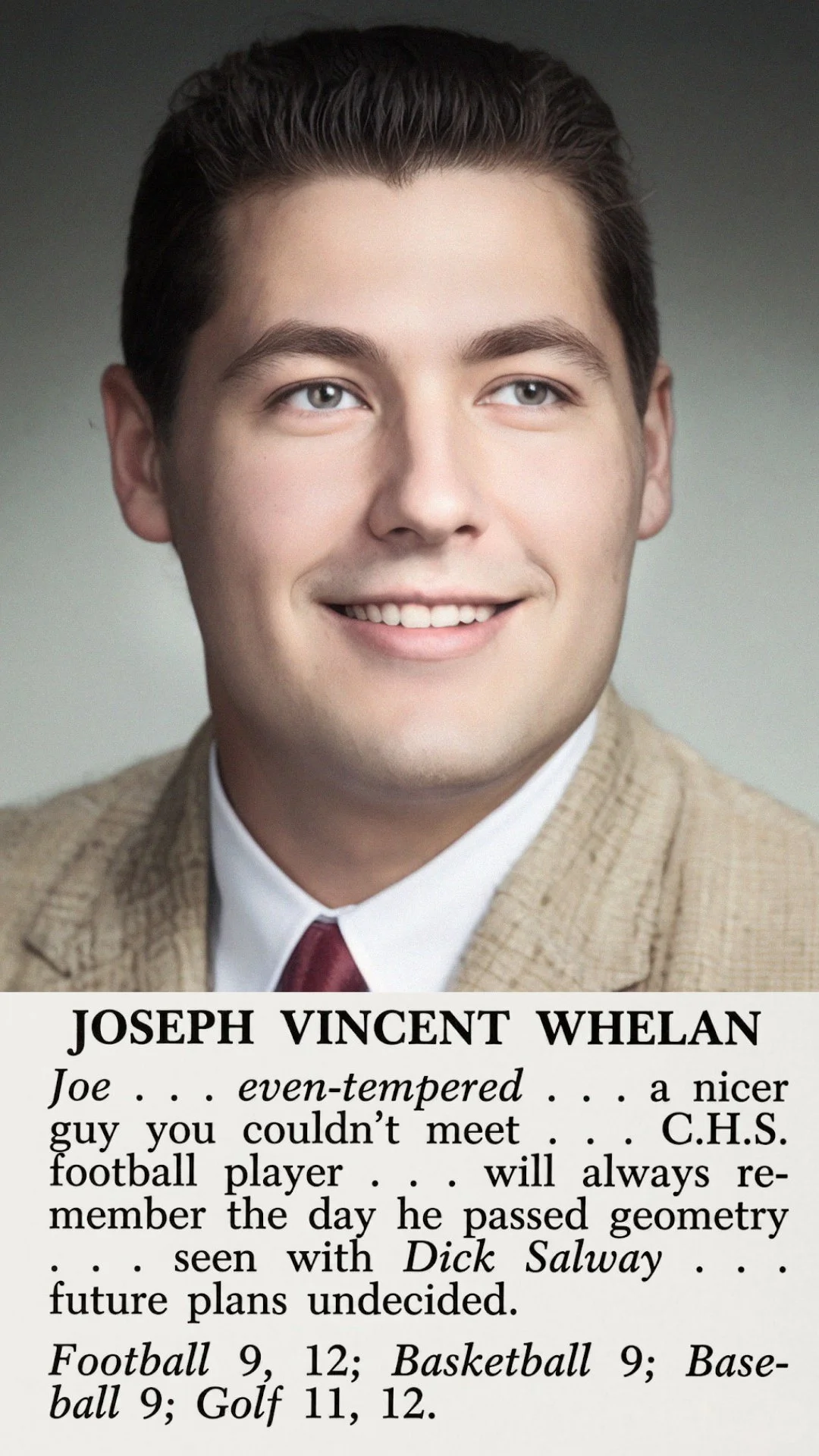
Classmate Chuck Johnson, CHS ‘59, told us that the description above was spot on, “a nicer guy you couldn’t meet”. Chuck added that Joe was polite, honest, fair and kind. Cookie Castaldo Williams, also CHS ‘59, called him a “special guy, pleasant to be around, a gentleman”.
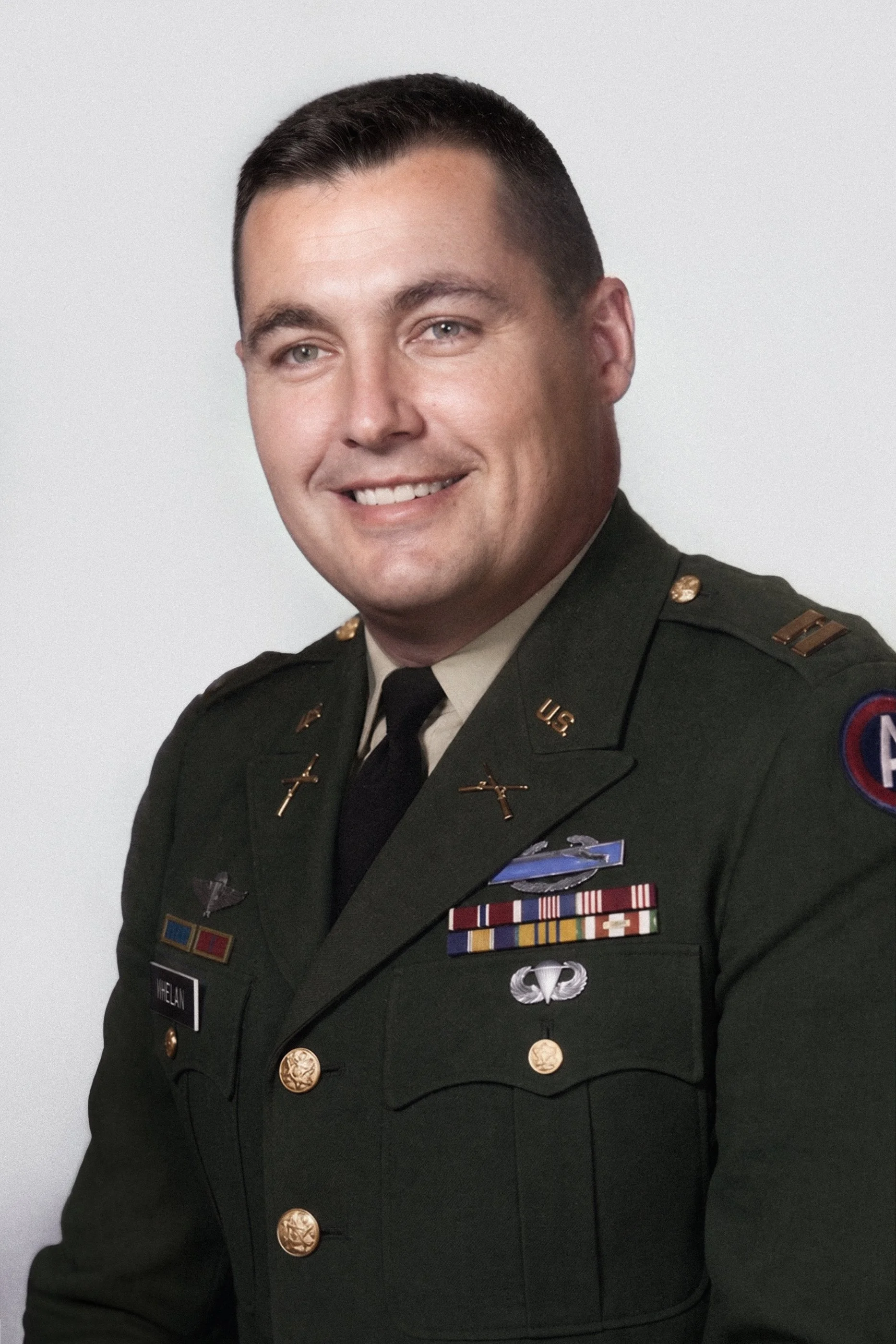
We consider ourselves very fortunate when a family can produce an official military portrait. This is possibly the best image that we have had the honor to accept from a Gold Star Family.
“Future plans undecided” is what it says under Joe Whelan’s yearbook photo in the 1959 Golden C. But immediately after graduation, Joe made a choice and he joined the United States Army. In 1959, the Korean War was in the past, but instead, there existed a looming geopolitical tension between the United States, the Soviet Union, and their respective allies. We were in the midst of the Cold War. In Cranford, licensed public fallout shelters, affixed with distinctive yellow and black signs, were stocked with supplies and radiation detection devices. Periodic air raid drills were conducted and compliance was expected throughout the township. In Joe’s first army enlistment, he served at Thule (pronounced Too-lee) Air Base in Greenland, 700 miles above the Arctic Circle. Our military serving in this harsh, inhospitable locale, experienced temperatures that could plunge to minus 76 degrees Fahrenheit, 89 mile-an-hour winds, intense snowstorms, and months of total Arctic darkness. Midway over the top of the world between Moscow and Washington D.C., Thule had the ability to intercept bomber attacks from northeast approaches to America, and it played a key role in air defense against the Soviets during this time.
Back to Civilian Life
In May of 1962, Joe Whelan completed his commitment to the army. He came home to Cranford and lived for a while in nearby Garwood. Joe found employment with the Elizabethtown Gas Company and his smiling face was once again seen around town as he renewed his high school friendships.
Sue O’Connor Kenny, CHS ‘60, entertained us with a great story of her connection to Joe. Throughout the 1960’s, although you were old enough to enter military service, it was still against the law for anyone under the age of 21 to purchase an alcoholic beverage in New Jersey. That was not the case in nearby Staten Island, and many, many young adults from New Jersey, age 18-20, drove over the bridge to check out the New York City bar scene. Sue and her girlfriends did this, and immediately upon arrival began to worry, “What if someone we know sees us?” Wouldn’t you know it, but into the bar, walked Joe Whelan with his friend, Bob Kenny. Sue still remembers, when Joe spotted them, he walked over and with his hands on his hips and a big grin on his face, he said, “Well, well, well...what are you ladies doing here?” Sue said that they saw the guys later at the Cranford Diner, and that night, Bob asked her out on a date. Bob and Sue married in 1962 and Joe was a groomsman in their wedding. Sue described Joe as kind, caring, patriotic and protective. It is perhaps some of those qualities that led Joe to turn back to military life and re-enlist in the army.
OCS, Airborne Training and Beyond
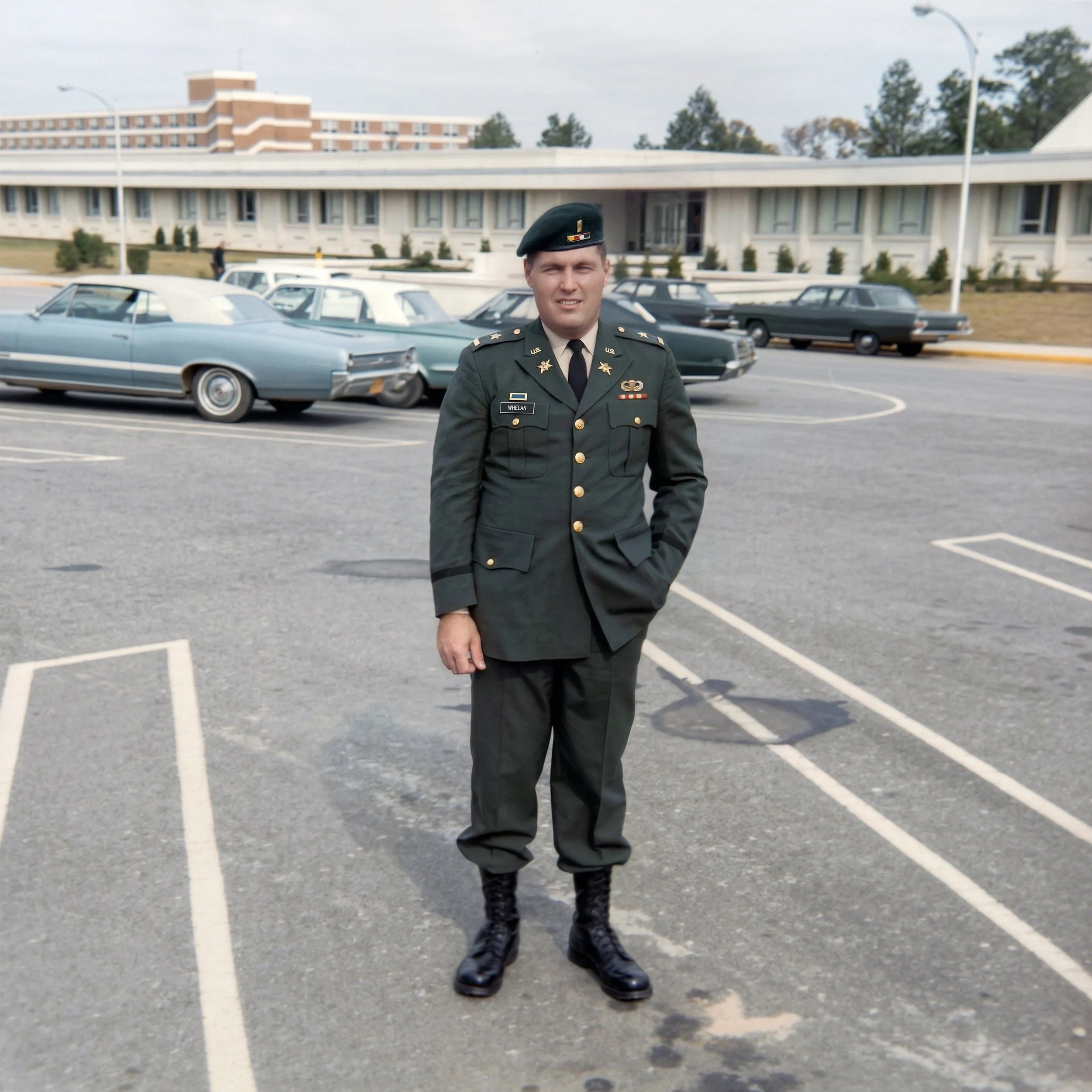
Most of Joe’s Special Forces training took place at Fort Bragg. He went through a lot in order to be able to don that special headgear.
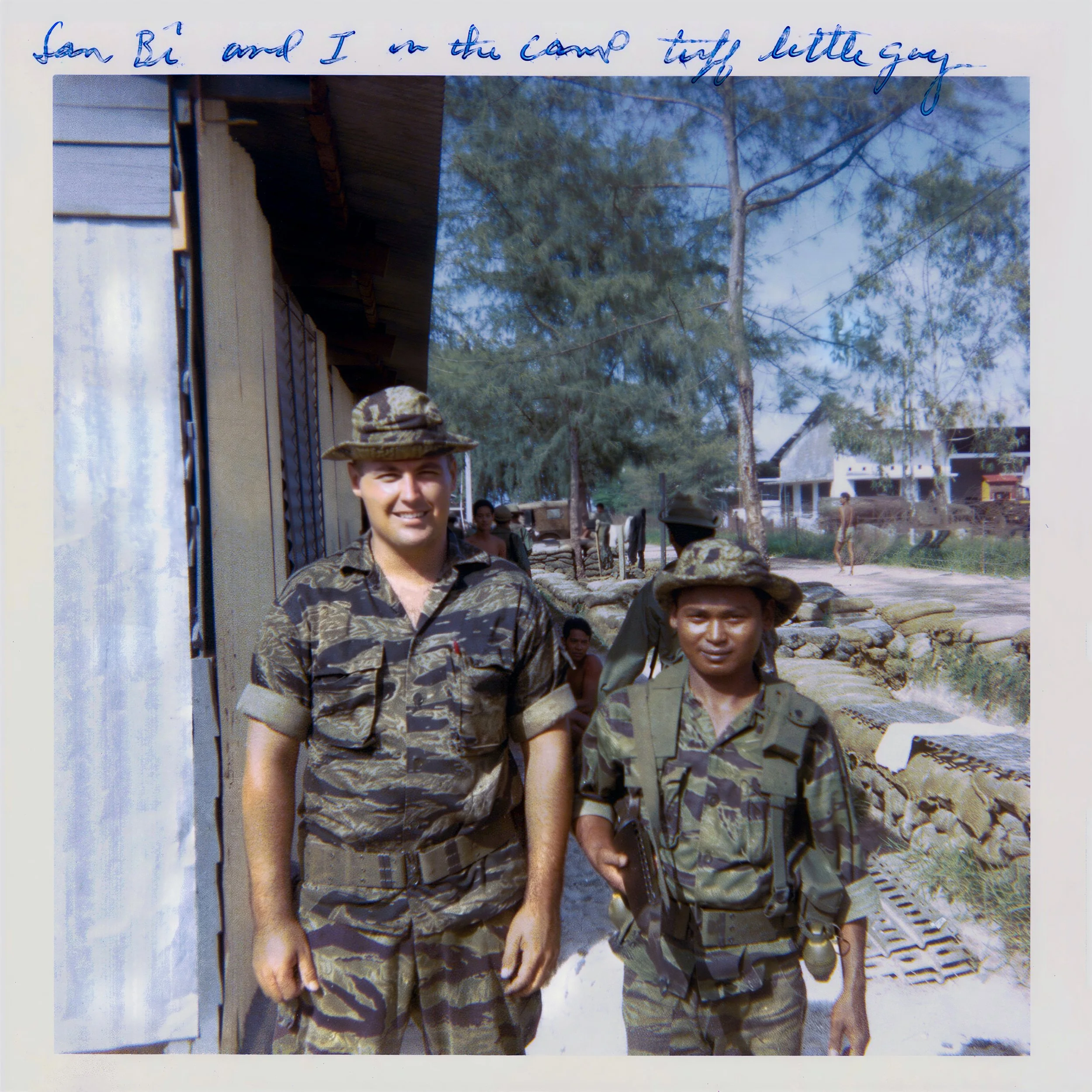
In order to multiply the force of their 12-men A-Teams, Green Berets trained South Vietnamese indigenous soldiers, called Montagnards, to defend their own country. Here in Joe’s own script, he describes San Bi as a “tuff little guy”. After Joe was mortally wounded in an ambush, his unit of Montagnards defeated the combatants that struck down their beloved mentor.
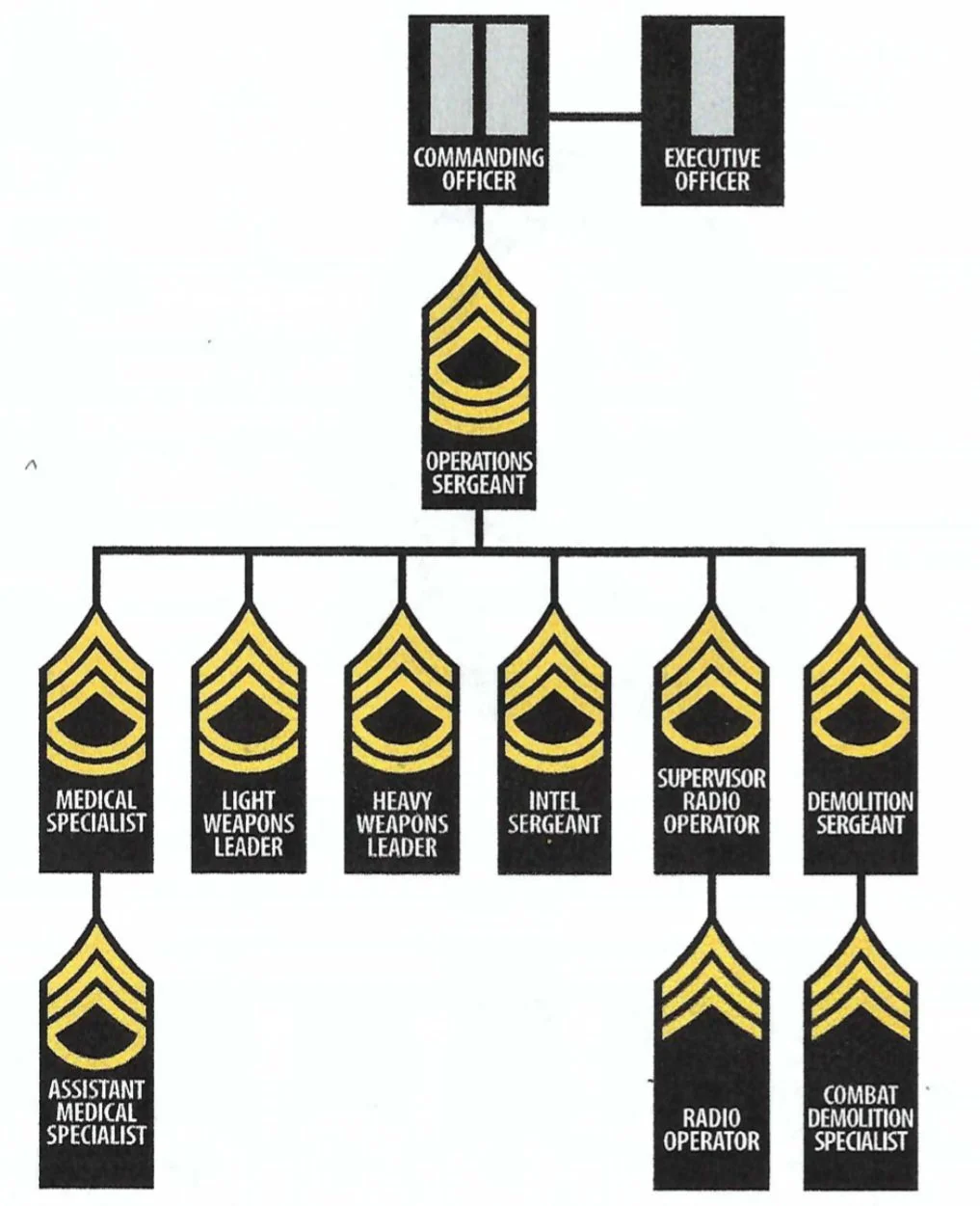
Shown are the components of an Army Special Forces A-Team from the Vietnam era.
1965 marked a turning point for U.S. involvement in what was happening in Vietnam. Up until now, we had only played an advisory role in the conflict. March of ‘65 brought boots on the ground and sustained bombing against North Vietnam. By mid-year, the U.S. would now find itself engaged in a full-scale war.
Joe Whelan’s return to the army during this time led him to Officer Candidate School at Fort Sill in Oklahoma. To meet the growing needs of an escalating war, Joe and his fellow candidates would be fast-tracked through their training to lead a combat unit and be commissioned as second lieutenants. With Fort Sill as the U.S. Army’s main field artillery center, training here concentrated on large, land-based, indirect fire weapons. The OCS program was demanding, rigid, and unapologetically harsh. After almost six months of training, Second Lieutenant Whelan graduated from OCS on August 8, 1966. Between 1965 and 1967, the number of officers graduating from Fort Sill, doubled, and then tripled in those three years, an ominous indication of where things were heading.
Training for our Cranford soldier continued. Joe traveled to Fort Benning in Georgia to earn his Parachutist Badge, silver wings encircling an open parachute, also known as “Jump Wings”. The three weeks of jump training were both physically and mentally exhausting. By design, trainees were instilled with such intense instincts that veteran jumpers report, 60 years later, if they find themselves falling, they immediately assume the PLF (parachute landing fall) position before they hit the ground.
“One-hundred Men They’ll Test Today, Only Three Win the Green Beret.”
The above song lyric reflects the odds of a U.S. soldier becoming a member of the United States Army Special Forces, commonly referred to as Green Berets. At this time in Joe’s military career he had the qualifications required to be considered for Special Forces, which included high scores on intelligence testing, the ability to meet the Army’s highest physical fitness standards, and Jump Wings. A final step to eligibility was passing the “very strange” Special Forces Qualification Test, which was said to be reminiscent of an episode of the 1960’s television show Mission: Impossible. The test consisted of “tape-recorded instructions, exotic scenarios, photos to study, then a series of questions offering only imperfect answers”. As with every hurdle that the army had put before Joe Whelan, he cleared this one and was heading for his most demanding training experience yet, one which was designed to weed out all but the army’s most elite fighting men.
Special Forces in Vietnam extended the reach of the American military into remote areas of the battlefield, including far behind enemy lines. The self-sufficient 12-man “A-Teams” used unconventional warfare methods on missions regularly involving reconnaissance, intelligence gathering and the locating and surveillance of enemy camps. Their activities surrounding the Ho Chi Minh Trail disrupted the flow of North Vietnamese troops and supplies being moved into South Vietnam. Picture everything that you have seen in the movies Delta Force, First Blood and The Green Beret, and then some.
Green Beret training is among the top levels of the world’s most intense and difficult military training. In the 1960’s, its scope was exceptionally broad, and formation of an A-Team required skills in weaponry, demolition, communications, medical trauma and engineering. For each team member, mastery in a particular role was required, as well as cross-training in all of the others. A Special Forces candidate may have entered training thinking, “What will we blow up first”? Instead, to their disappointment, their first week of training was probably MOI, methods of instruction. In order to multiply the force of their A-Team, they would be training indigenous forces, the Montagnards, who would be under their command. Part of MOI training included cultural awareness and foreign language classes. If you did not have the ability to teach, Special Forces could not use you. In his training at Fort Bragg, Joe Whelan and his fellow candidates were pushed to their limits. It was during a field exercise that they discovered they would receive no more canned C-rations. Instead, the candidates were handed a live animal, which they needed to kill, clean and cook. Soon it became second nature to prepare a meal of chicken, rabbit or goat. The candidates slogged through miles of mud, endured extreme weather conditions and were deprived of sleep to the point of hallucinations. At times they were given false hope that the end of a training exercise was near, only to have another 15 miles tacked on. When the going got tough and the candidates were using every ounce of their remaining strength to complete their assignment, pushing one shaky leg in front of the other, the instructors were always there to taunt them. “We’ve got a hot meal, cold drink and a hot shower waiting for you. Why would you take this abuse when you can just quit”. Many soldiers took that option and only those who really wanted it were able to don their green berets at training’s end.
Someone Special Enters Joe’s Life
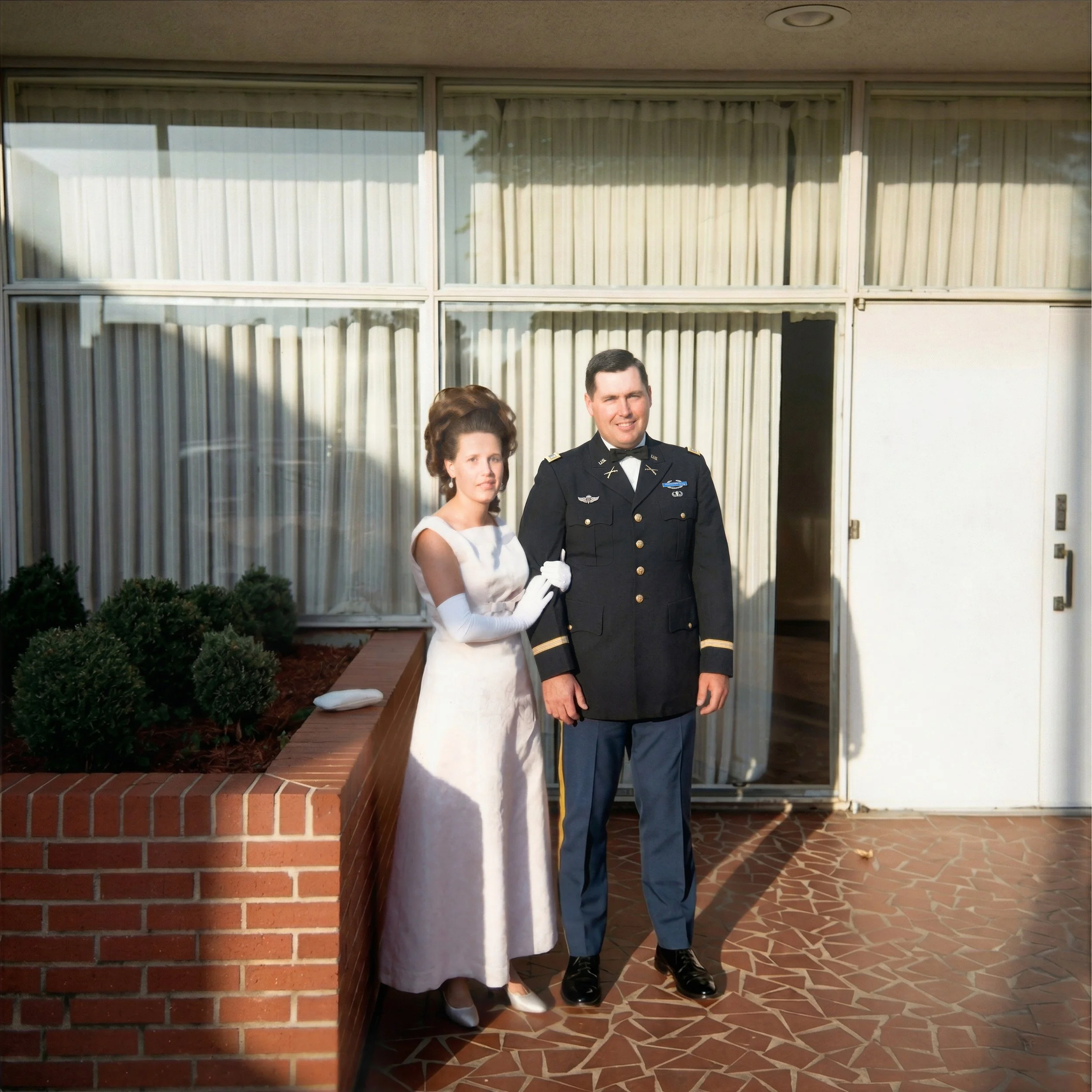
Joe and Dorothy dressed for a formal military affair. What a special event this must have been for this beautiful couple.
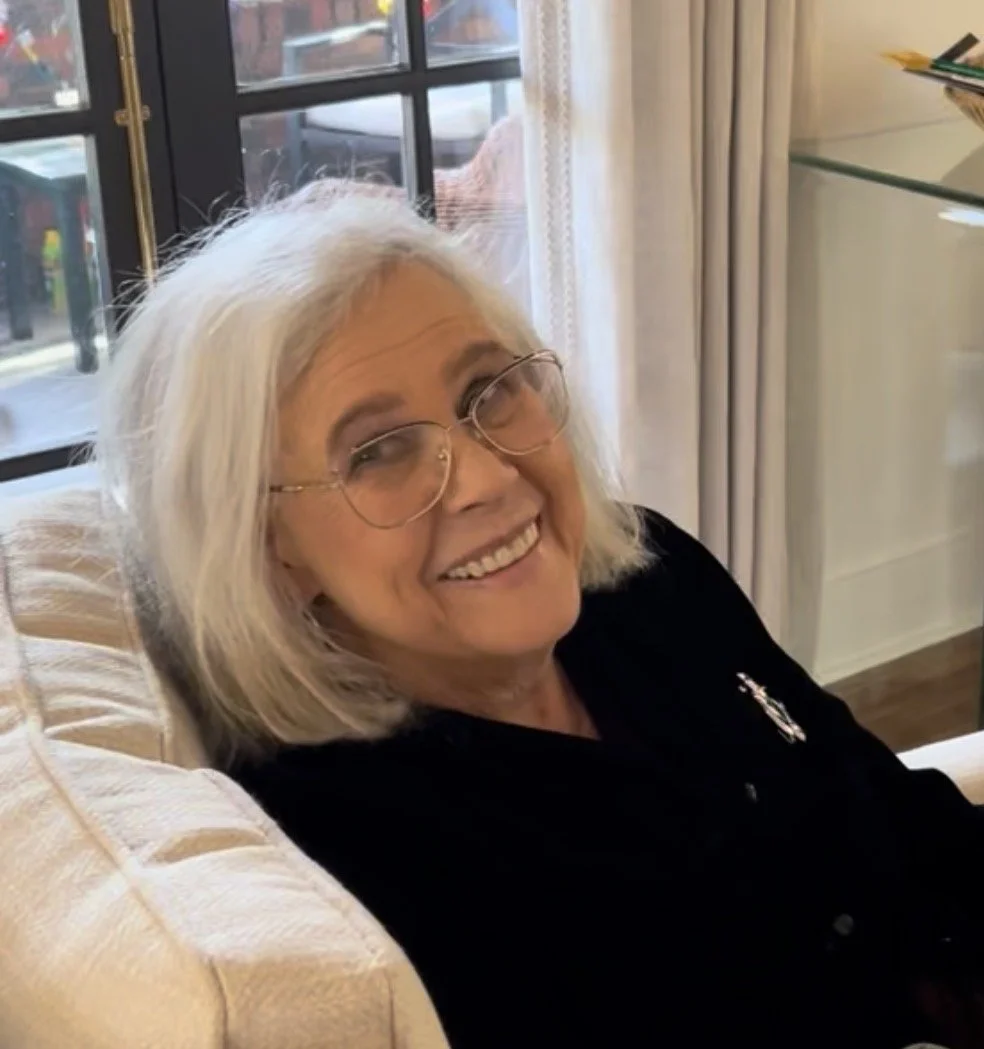
Sixty years have gone by, but we still can easily see how this pretty lady stole Joe Whelan’s heart. Dorothy Gillespie Whelen Starrett, was just 24 when she lost her hero. As a single mom, she raised their daughter and brought her through an era of anti-war sentiment. Both women deserve our empathy and gratitude for all that they have sacrificed.
During our research, we had the pleasure of meeting and speaking with Joe’s daughter Charlotte Whelan Stilwell and her mom, Dorothy Gillespie Whelan Starrett, both South Carolina natives. We were so grateful for their participation as we gathered information for our tribute to Joe Whelan.
Dorothy was not shy when she told us about first laying eyes upon Joe. During the early days of Joe’s Special Forces training, Dorothy was visiting her sister, who was a nurse at Fort Bragg. The ladies were invited to a house party off base. When Dorothy walked in, Joe was standing near the fireplace. At over six feet tall and physically fit from his military training, seeing him made Dorothy quietly say to her female companions, “Hands off, he’s mine”. The couple met that night, dated, and towards the end of Joe’s training they were married at Fort Bragg. Dorothy remembered that the first dinner that she served to her new husband was lasagna. The newlyweds had six months together before the inevitable happened, in August of 1967, Dorothy’s Green Beret was sent to Vietnam.
Joe Goes In Country
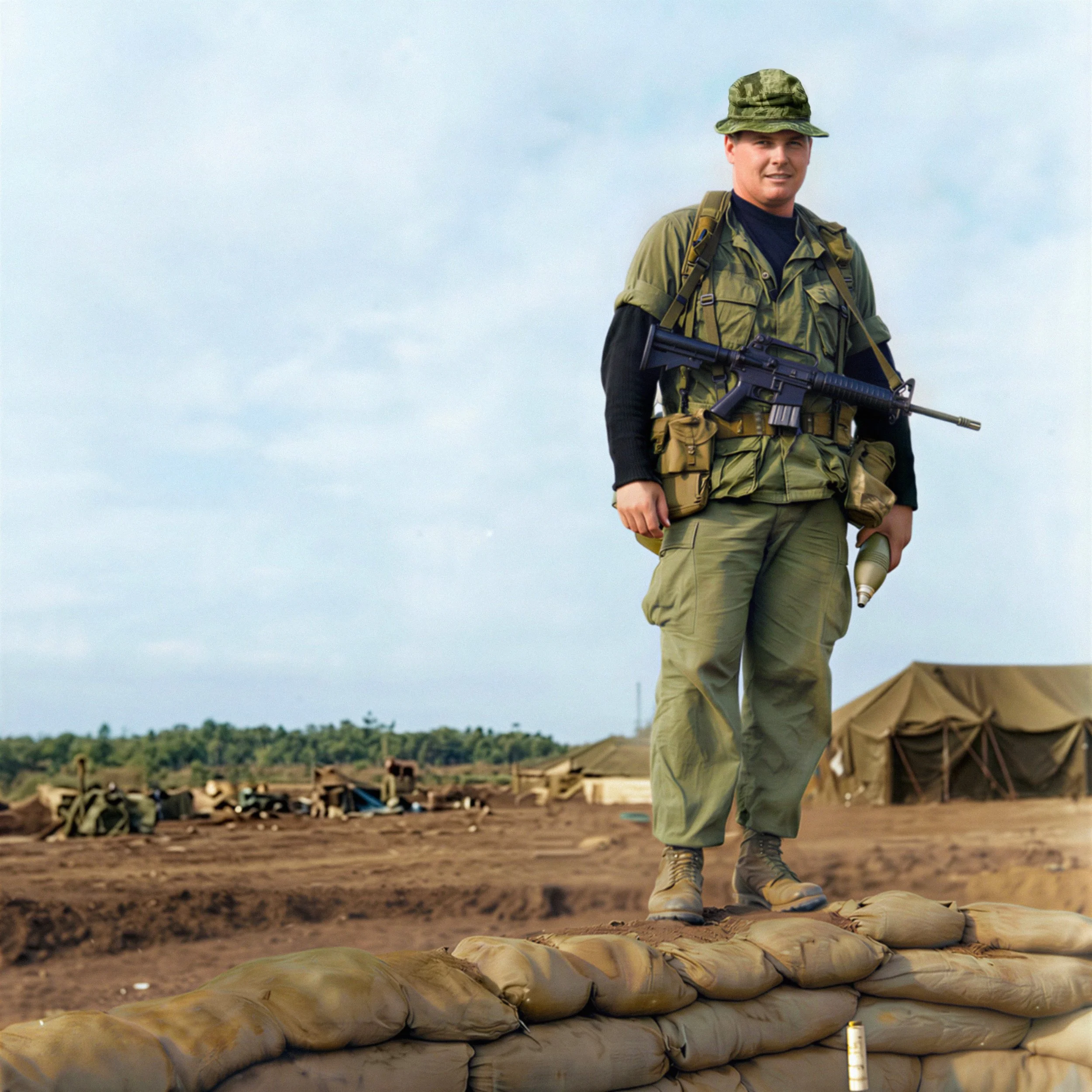
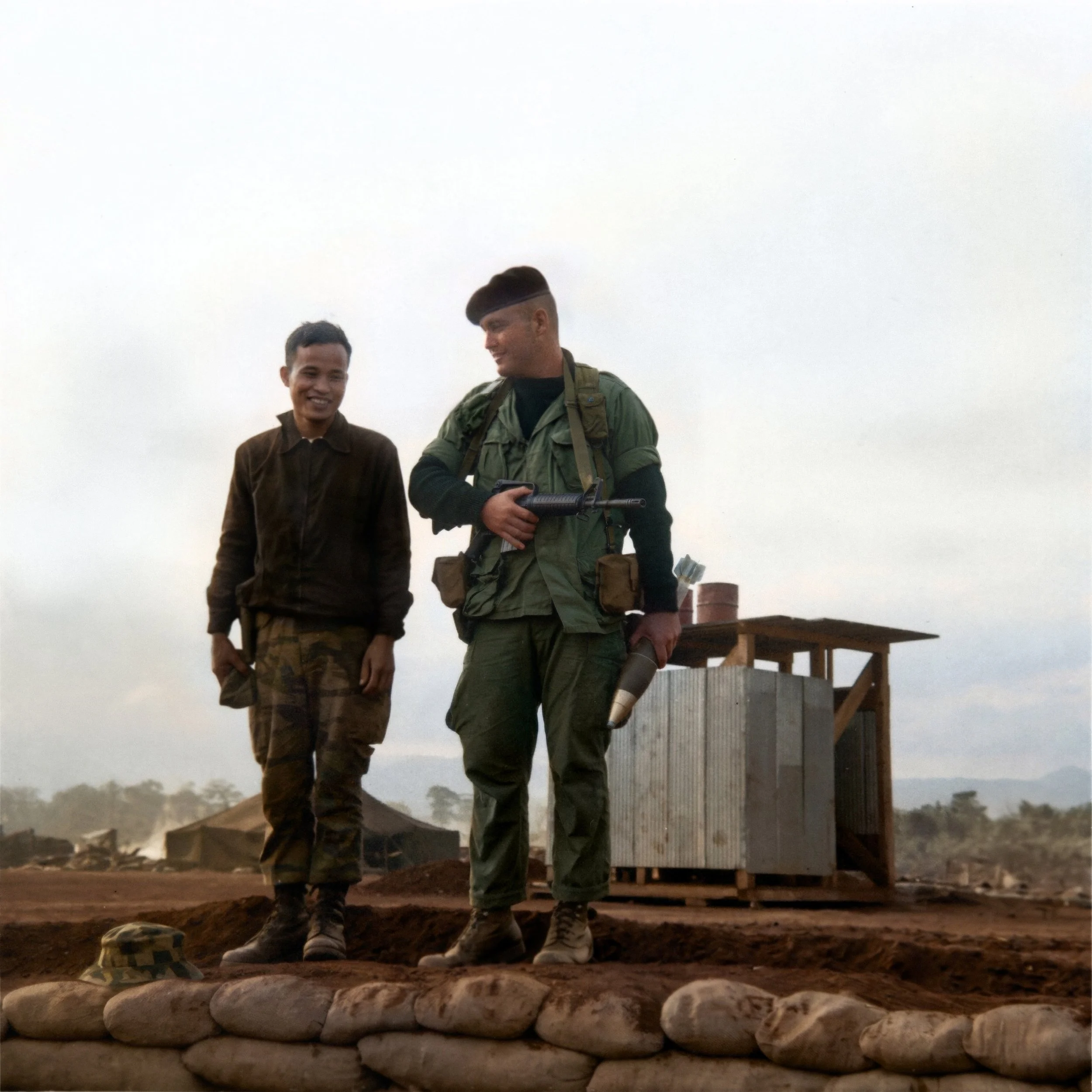
Joe Whelan and his M-16 rifle, the standard issue of an American soldier serving in Vietnam. Note the mortar shell gripped in his hand.
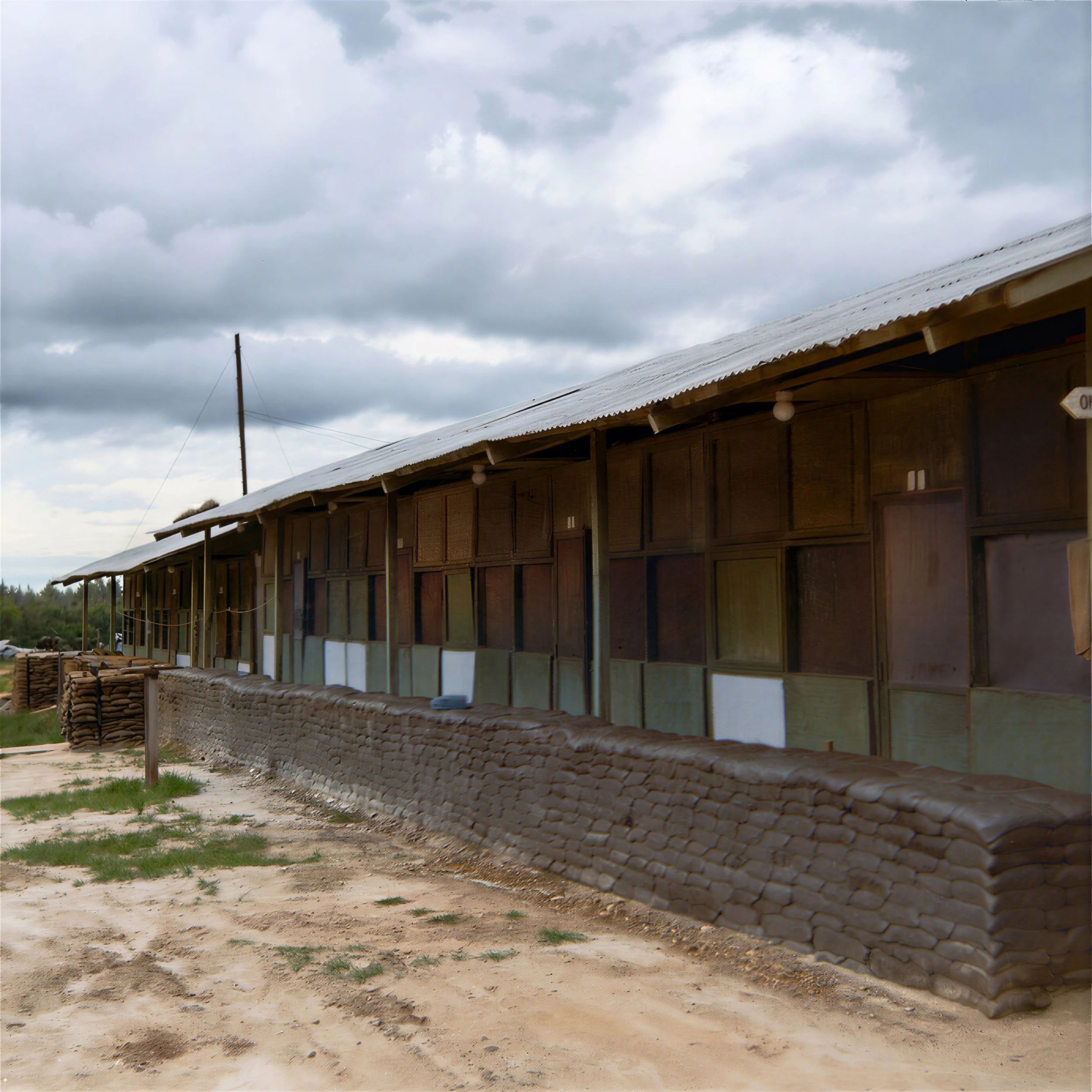
In his own handwriting Joe described a 3x3 snapshot that was sent back to NJ, “this is where I lived in Phu Bai”, a combat base in central Vietnam. These simple barracks were known as “hooches” to the soldiers serving in Vietnam. They were thin-walled, simple accommodations.
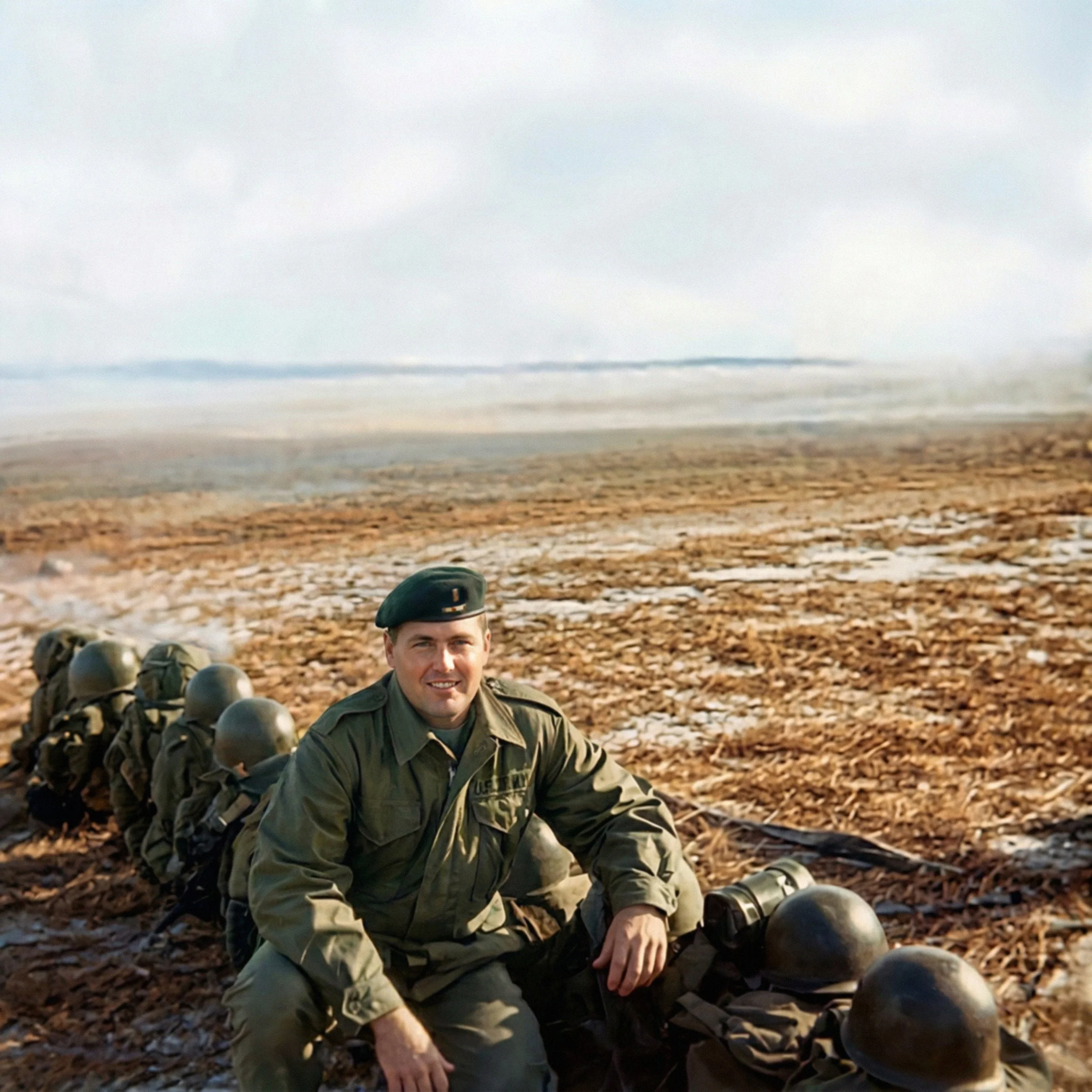
Captain Joseph Whelan kneels in front of a line of twelve Special Forces packs while “in country” in one of his deployments. We believe that this non-descript uniform is representative of what was worn behind enemy lines during covert actions.
Now a member of the 5th Special Forces Group, Joe was ready to apply the knowledge and skills he had gained throughout his many months of his Green Beret training. The majority of his tour of duty would span over the first eight months of 1968, the most violent year of the Vietnam War. Joe, most likely, was assigned to a remote Special Forces outpost, also known as a CIDG camp (Civilian Irregular Defense Group) where small groups of Green Berets turned Montagnard tribesmen into soldiers. The Americans ate, slept and fought alongside the “civilian irregulars” or Montagnards, and a strong bond developed between these two groups of people. In Joe Whelan’s case, he even considered bringing a Montagnard child back to the U.S.
1968 began with the Tet Offensive, a deadly, surprise attack by the North Vietnamese, which occurred during the scheduled 36-hour ceasefire for the Lunar New Year holiday. The Cranford Chronicle states that the Special Forces outpost at which Joe was serving, possibly Lang Vei, was overrun by North Vietnamese troops during the Siege of Khe Sanh, which occurred during Tet. Joe was wounded twice during this tour of duty and also awarded a Bronze Star for Gallantry. Our team is still looking for additional details on each of these events.
Time Spent as a Family
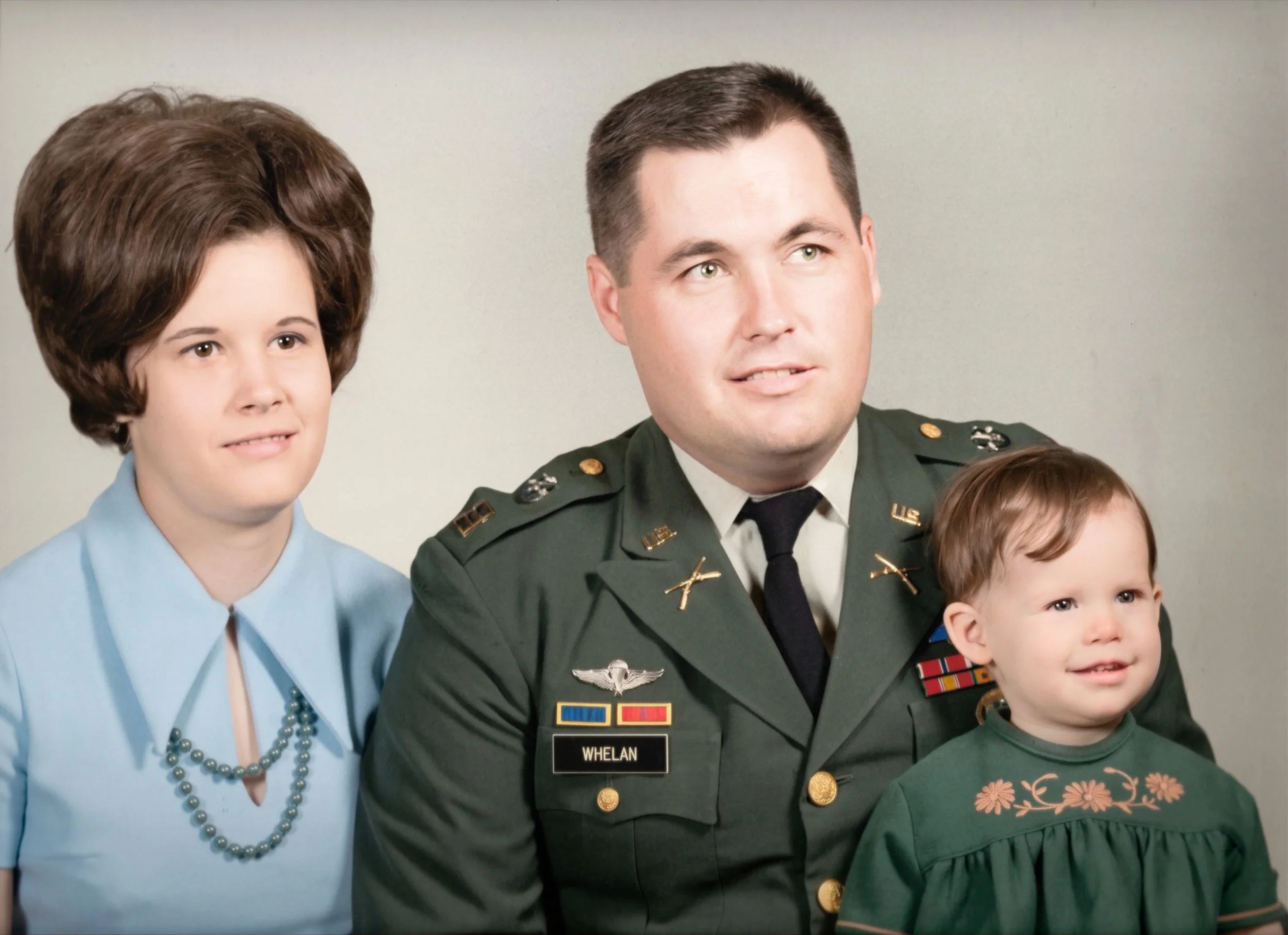
Joe, Dorothy and Charlotte in a beautiful family portrait.
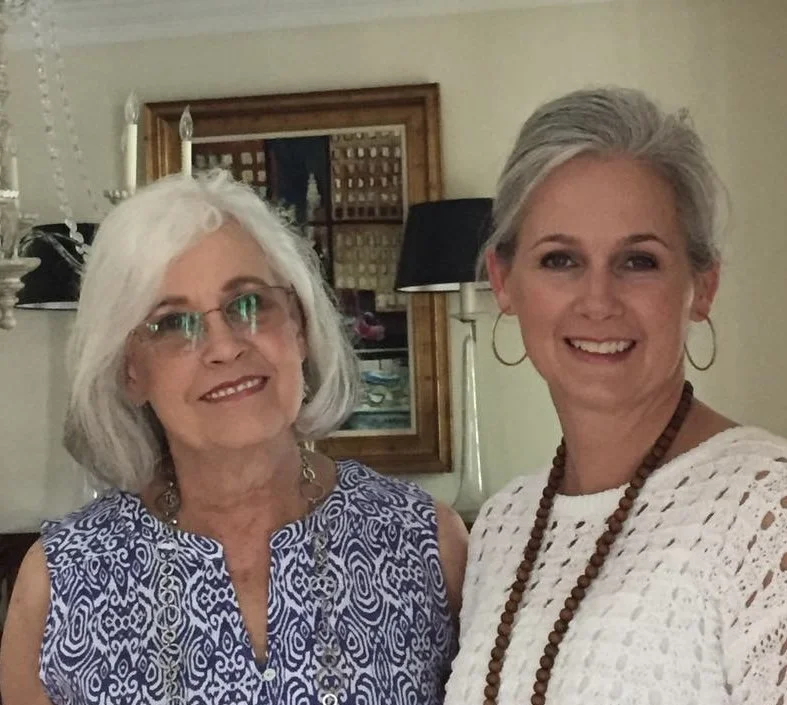
These two lovely ladies are Joe’s girls, wife Dorothy and daughter Charlotte. Just 18 months old when her dad died in Vietnam, Charlotte has no real memories of him, and she depends on stories told to her by her mom, and others who knew Captain Joe. They live near each other in South Carolina.
In August of 1968, when Joe returned back to the states, a very important introduction awaited him. Miss Charlotte Ashley Whelan had been waiting six months to meet her dad. While Joe was fighting battles on the other side of the world, his daughter had been born in Greenville, South Carolina. Joe, now having attained the rank of captain, was stationed at Fort Bragg in North Carolina, where he served as a Company Commander (Commanding Officer/CO) in the 4th Battalion, 1st Training Brigade. Dorothy and Charlotte lived in a nearby rental. A CO’s job started in the early morning and finished late, but Joe was able to go home to his family every night. For the present time he could continue his role as a husband and start yet another training session, that of being a new father.
We were very fortunate to connect with former Captain Michael Bergin, who served with Joe at Fort Bragg. Both were Company Commanders in the same training brigade during the first half of 1969. Each man had a goal of ensuring that his entire company, of about 200 trainees, would successfully complete eight weeks of basic training. The CO directed a layered team of officers (planners), NCO’s (trainers), specialists (instructors of specific skills) and an administrative staff, to quickly turn civilians into combat-ready soldiers, most likely destined for Vietnam. On multiple occasions Michael Bergin, a bachelor at the time, was invited to Joe and Dorothy’s home for dinner. He described Joe as low key, approachable and friendly.
Joe’s Final Mission
Speaking to family and friends of Joe Whelan made us aware of his strong sense of duty. In September of 1969, Joe returned to Vietnam to again lead missions with the Montagnards. Once the boy next door from Cranford, N.J., Captain Joseph Whelan, age 27, was now a member of a highly classified unit which conducted its missions, deep behind enemy lines. This was MACV-SOG, Military Assistance Command Vietnam Studies and Observations Group, a misleading name for this clandestine, high-risk operation. SOG uniforms were generic, without names, ranks or insignias, as were the helicopters which inserted the teams into hostile territory. Before a SOG mission, all personal effects of each participant, dog tags, wallets, ID cards and class rings, were locked away in the unit’s safe. SOG missions were exceedingly dangerous and of great strategic importance.
Just three weeks into his second tour of duty, Captain Joe Whelan was commanding a platoon of 45 men, Americans and Montagnards, on what was planned to be a week-long reconnaissance-in-force in Laos. Reconnaissance-in-force meant that if conditions called for it, the unit was prepared to react to what they observed. It should be noted that the North Vietnamese, as well as having the home turf advantage, also had elite intelligence and combat forces.
Upon insertion into the designated landing zone, the platoon began receiving enemy fire. As they advanced, they were shot at from all sides with automatic weapons and rockets. It was an ambush, and the platoon was outnumbered at least three to one. A group of the Montagnard soldiers was out in the open, stunned by the ferocious, surprise attack. Captain Whelan left cover to organize and lead the Montagnards, and along with the rest of the team they rushed towards fortified enemy positions on a nearby hilltop. Despite being knocked down by grenades multiple times, Captain Whelan courageously got back on his feet to continue leading his men through rank after rank of enemy soldiers. Joe kept up this brave advance until he received a direct hit from a rocket propelled grenade. His men fought on and routed the North Vietnamese from their defensive positions. Captain Whelan's gallantry in this mission was in keeping with the highest traditions of military service and reflected great credit upon himself, his unit, and the United States Army. It earned him a Silver Star, but sadly, it cost him his life.
Throughout his military service, it seems that each time, Joe chose the harder path to quietly reach his full potential as a soldier. Then, he went to where he felt that he was needed the most. The example set by this well-liked Cranford kid, who had what it took to become one of our military’s finest, will always be a source of pride for our township, and all Americans.
Joe Whelan left behind his wife Dorothy, age 24 and his daughter Charlotte, 18 months. He was mourned by his parents, his three sisters Joan, Geri and Theresa and their families, as well as the large number of admiring friends that he had made throughout his life. Joe was remembered at church services in Cranford and Bayonne and buried with full military honors at Arlington National Cemetery.
Honoring Joe and His Brothers-In-Arms in Cranford
It wasn’t until 1983, that the men from Cranford who fell in Vietnam, were memorialized with a plaque. This endeavor was promoted by Cranford committeeman, Dick Salway, a lifelong friend of Joe Whelan. Dick also noted that although Joe spent the great majority of his life in Cranford, his address of record was listed as Garwood, and his name was omitted among the names of our fallen military spoken in Cranford each Memorial Day. Dick Salway kept Joe in his heart throughout his life, and in the early days of the Cranford 86 Project, Dick was one of the first to sponsor a street banner, that of his friend Joe Whelan. On Memorial Day 1982, the first time Joe Whelan’s name was recited as one of Cranford’s fallen, Dick Salway spoke about his friend, “he believed strongly in the need to preserve our freedom and volunteered to return to help”. In 2026 Dick’s wife, Karen Croushore Salway added to her husband’s feelings about their friend. She said that Joe “would always do the right thing and really cared about people”. Karen credited the existence of her marriage to Dick to Joe Whelan. Her courtship with Dick was a little rocky at times, and it was their friend Joe that brought them back together each time they grew apart. The Salways had two children and 59 years together until Dick’s passing in 2025. Joe was the best man at their wedding.
Final Thoughts

Captain Whelan is buried at our nation’s most sacred shrine, Arlington National Cemetery. When our Cranford scout troops visit Arlington, they pay their respects to Captain Joe (Section 36 Grave # 2604) and the other Cranford servicemen buried there.
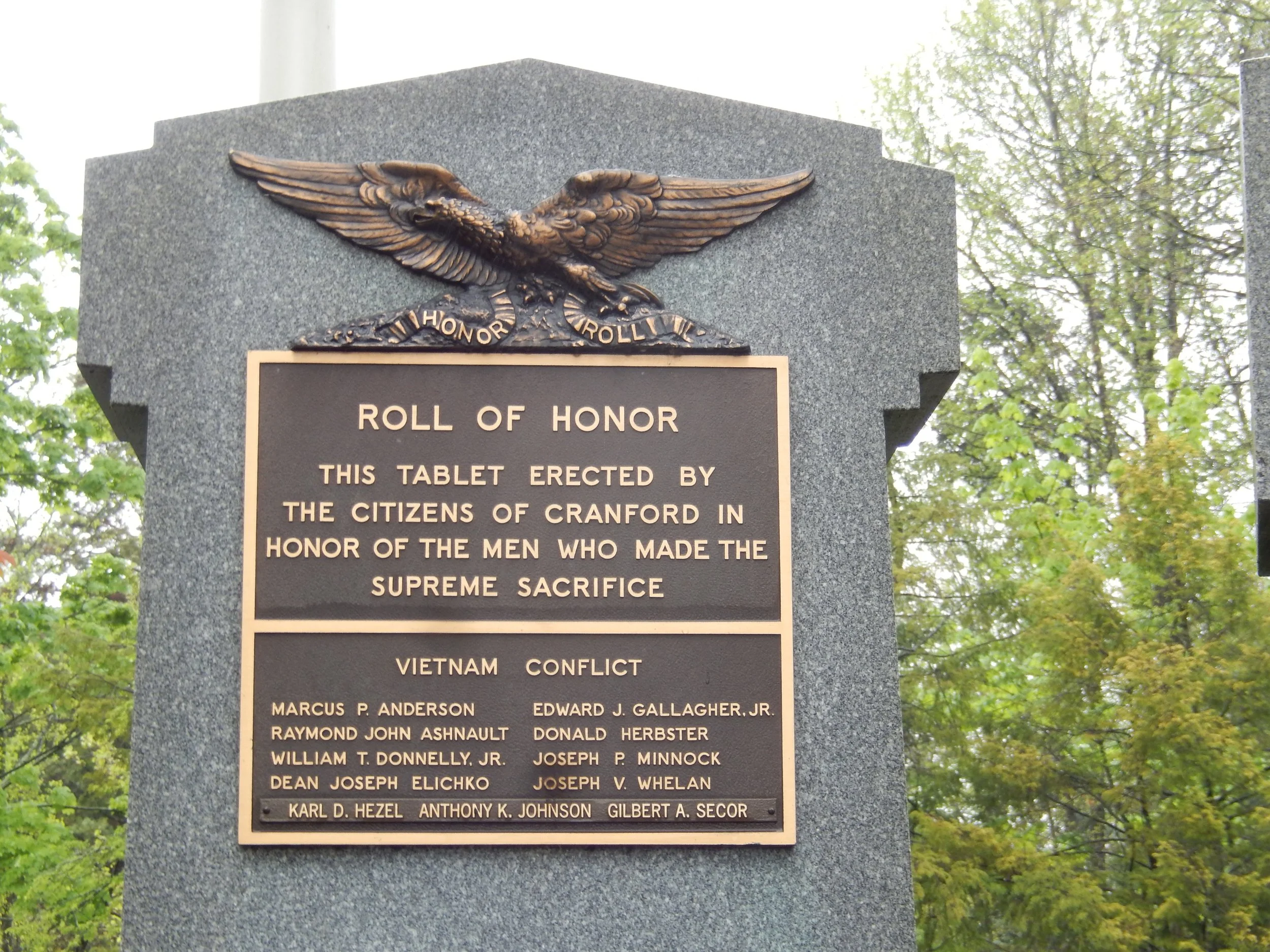
Joe's name cast in bronze on the Vietnam Conflict Roll of Honor in Cranford's Memorial Park.
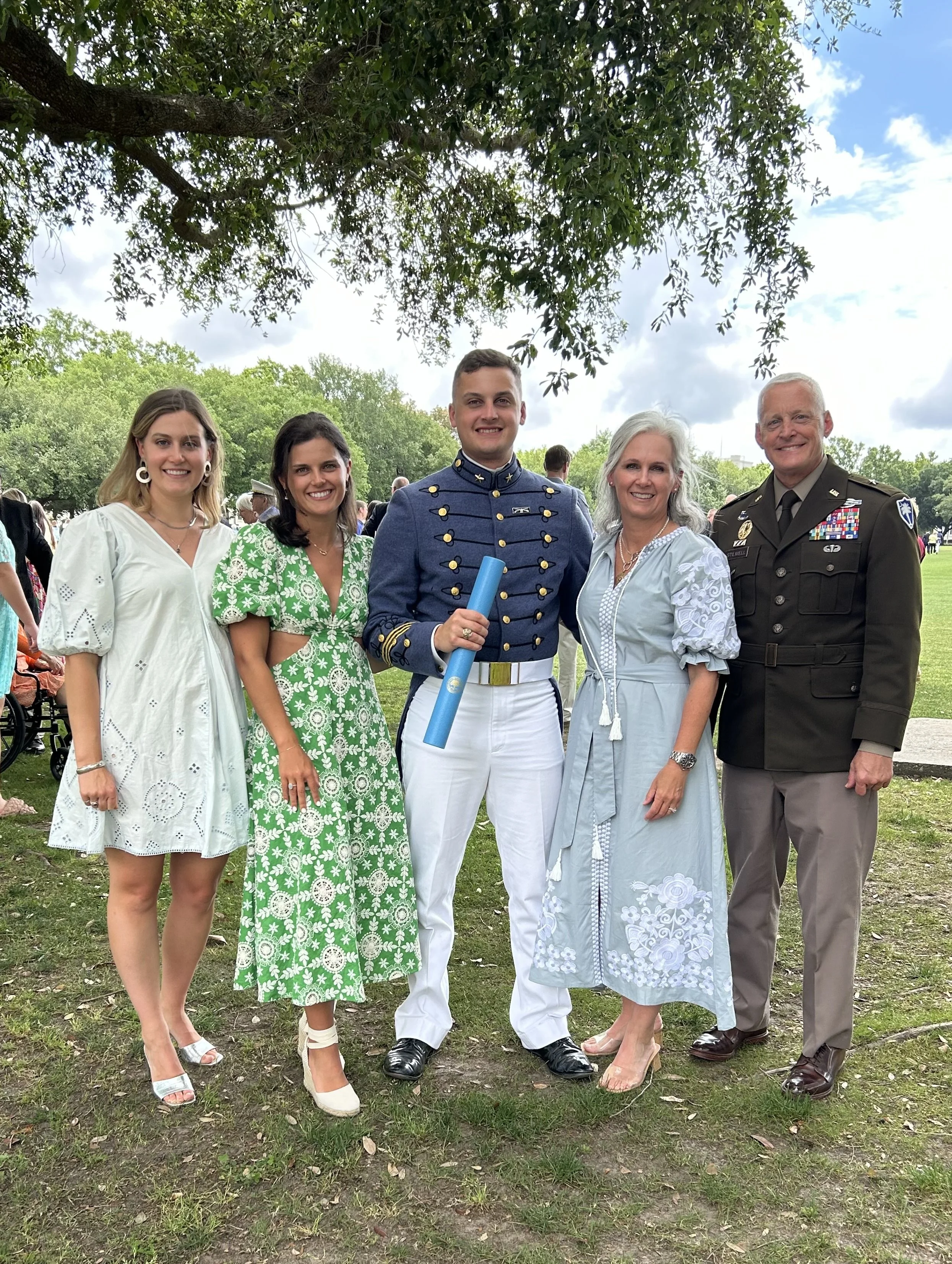
The Stilwell family, Charlotte with her husband, Major General Robin Stilwell; daughters Eli and Dee; and son Joseph Whelan Stilwell. Photo is from Joe’s graduation from the Citadel in 2025.
As amateur military historians, learning and writing about the Green Berets made us wonder, how did the risks taken by these elite warriors make a difference? Special Forces intelligence gathering and unconventional warfare must have prevented larger conflicts. Their indigenous training programs surely reduced the need for large U.S. deployments in remote regions, and it seems evident that reconnaissance efforts made U.S. airstrikes far more precise and effective. While we could not find an official estimate, we think it is reasonable to say that the bold actions of Captain Joe Whelan and his fellow Green Berets in Vietnam prevented the loss of many U.S. and allied lives over the course of the war.
Our conversation with Joe’s widow Dorothy and daughter Charlotte was emotional, and even after so many years, the pain of their loss is evident. When asked what she wanted everyone to know about her husband, Dorothy paused for a long moment and said “He was a hero, to me and his countrymen”. Dorothy raised Charlotte as a single mom and didn’t remarry until 1999. She made sure that her daughter did not lack for anything of true worth. Charlotte graduated from the University of South Carolina and Clemson University. She is the wife of Major General Robin B. Stilwell, who is the Adjutant General for the State of South Carolina. Together they have three adult children, Eli, Dee, and Joseph. In addition to being a Gold Star child and a military wife of 31 years, Charlotte is also a military mom. Son Joseph Whelan Stilwell, is currently a First Lieutenant serving in the infantry at Fort Stewart, Georgia.
“Because he died when I was a baby, I never had a chance to know my dad, Captain Joe. What I do know is his service and his sacrifice — and from that, I understand the kind of man he was. He gave his life in service to our country, something I carry with me always. I am proud to be his daughter. ”
Joe Whelan’s last mission was documented in the book Secret Commandos by John L. Plaster. Plaster served with MACV-SOG and his book was extremely helpful to us in understanding and explaining U.S. Army Special Forces.
Addendum
Below is additional media relevant to this story.